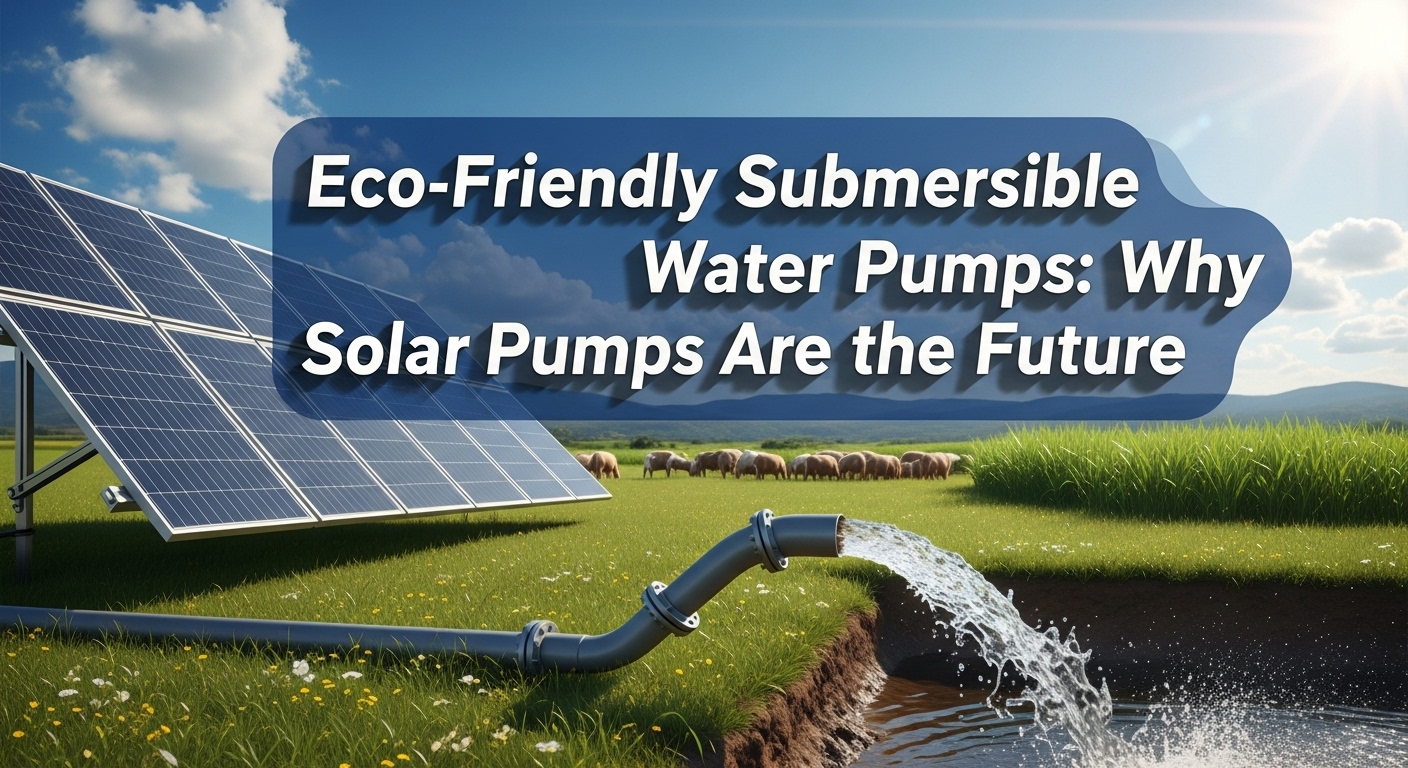
Water management is undergoing a significant transformation as the world shifts toward sustainable technologies. Among the innovations reshaping this sector are solar-powered submersible pumps, which have emerged as a game-changer in eco-friendly water solutions. These pumps promise efficiency, environmental sustainability, and long-term cost savings.
Key Takeaways
- Solar-powered submersible pumps convert sunlight into electricity for reliable, off-grid water management
- These systems eliminate fuel and electricity costs while reducing carbon emissions significantly
- Ideal for agricultural irrigation, remote locations, urban wastewater management, and emergency flood response
- Initial investment is higher but operational costs are substantially lower over the system's lifespan
- Hybrid systems combining solar and grid power address weather-dependent limitations
- Government incentives and declining solar panel costs make solar-powered pumps increasingly accessible
- Advanced battery storage and improved PV technology continue to enhance system efficiency
Understanding Submersible Water Pumps
A submersible pump is a device designed to function while fully submerged in water or another fluid. These pumps are commonly used for applications such as:
- Agricultural irrigation from wells and water sources
- Residential and commercial water supply systems
- Wastewater and sewage management in municipal systems
- Construction site dewatering and flood management
- Mining operations and slurry handling
- Industrial fluid transfer and processing
- Drainage control in basements and low-lying areas
- Emergency water removal during natural disasters
Submersible pumps operate silently while fully submerged, eliminating noise pollution associated with surface pumps. Their efficient design allows direct water access and minimizes cavitation risks, making them ideal for various water management applications.
Solar-Powered Submersible Pumps: How They Work
A solar-powered submersible water pump uses photovoltaic (PV) panels to convert sunlight into electricity, which powers the pump. Key components include:
Photovoltaic Panels
Solar panels capture sunlight and convert it into direct current (DC) electricity. Modern panels feature high efficiency ratings (18-22%) and durability to withstand various weather conditions. Panel size and quantity depend on the pump's power requirements and daily operational hours needed.
Charge Controller
The charge controller regulates power from the solar panels, protecting the system from overcharging and managing voltage fluctuations. MPPT (Maximum Power Point Tracking) controllers optimize energy extraction from panels throughout the day, improving system efficiency by 20-30% compared to standard controllers.
Battery Storage System
Optional battery systems store excess solar energy for nighttime operation or cloudy days. Lithium-ion and lead-acid batteries provide flexible power management, enabling continuous system operation regardless of sunlight availability. Battery capacity determines how long the system can operate without sunlight.
Submersible Pump
The pump itself remains unchanged functionally but is configured to operate on DC power from solar panels or stored battery energy. Modern solar-compatible pumps feature variable frequency drives that adjust operational speed based on available solar power, optimizing energy utilization.
Mounting and Installation Hardware
Specialized mounting systems secure solar panels at optimal angles for maximum sun exposure. Weatherproof electrical connections protect the system from environmental damage while ensuring safe power transmission from panels to the pump.
Advantages of Solar-Powered Submersible Pumps
1. Eco-Friendliness
Solar-powered pumps are an environmentally conscious choice. Unlike diesel or electric-powered systems, they rely on clean energy, producing zero greenhouse gas emissions during operation. A single solar-powered system can offset several tons of carbon dioxide over its 25-year lifespan, contributing significantly to environmental sustainability goals.
This clean energy approach makes solar-powered pumps suitable for applications in sensitive environments where traditional power sources would cause pollution concerns. Agricultural operations, nature reserves, and remote communities benefit greatly from the environmental advantages of solar technology.
2. Cost Savings
While the initial investment is higher than traditional pumps, the operational costs are significantly lower. Eliminating fuel expenses and reducing electricity consumption results in rapid payback periods typically between 3-7 years. After payback, systems operate with minimal fuel or electricity costs for the remaining 15-20 year lifespan.
Additional savings accrue through reduced maintenance compared to diesel systems, which require regular servicing and fuel supply logistics. Over a 25-year period, solar-powered systems can save 70-80% compared to diesel-powered alternatives.
3. Reliability in Remote Areas
Solar-powered single-phase submersible pumps are ideal for rural and off-grid locations, providing reliable water access without dependence on external power sources or fuel supply chains. Remote properties can achieve energy independence with solar systems, eliminating the need to extend electrical infrastructure.
This independence proves particularly valuable in developing regions where electrical grid reliability is uncertain or extending power lines is economically unfeasible. Communities can access clean water independently, supporting agricultural development and improved living standards.
4. Versatility
From submersible drainage pumps for urban use to slurry pump designs for industrial applications, solar-powered systems adapt to diverse water management needs. The modular design allows scalability from small 1 hp residential systems to larger multi-horsepower industrial installations.
Flexibility in configuration enables solar systems to serve applications ranging from modest household requirements to large-scale agricultural irrigation or construction site dewatering.
Challenges and Considerations
1. High Initial Costs
The upfront cost of solar panels and installation can be a significant barrier to adoption. Complete systems with panels, controllers, batteries, and installation can range from $3,000 to $15,000 depending on capacity. However, government incentives, tax credits, and NGO subsidies increasingly help mitigate these expenses.
Declining solar panel costs (dropping 90% over the past decade) and improving system efficiency continue to reduce initial investment requirements. Financial programs enabling phased installation or leasing options make solar systems more accessible to property owners with limited capital.
2. Weather Dependence
Solar-powered systems rely on consistent sunlight, which may be limited in certain climates, during monsoon seasons, or in regions with extended cloudy periods. Cloud cover can reduce solar output by 50-75%, requiring battery storage or backup power sources to maintain operational continuity.
Hybrid systems that combine solar and grid power, diesel generators, or wind turbines address this limitation. Properly sized battery storage enables multi-day operation without sunlight, though storage costs increase system investment.
3. Maintenance Needs
While solar-powered submersible pumps and associated equipment require minimal maintenance, keeping panels clean and efficient is essential for optimal performance. Dust, dirt, leaves, and other debris accumulation reduces solar panel efficiency by 15-25% annually.
Regular panel cleaning (typically quarterly or semi-annually depending on location) maintains peak performance. Annual system inspections verify controller and battery functionality, ensuring reliable long-term operation. Compared to diesel system maintenance, solar system upkeep remains minimal and straightforward.
Real-World Applications of Solar-Powered Submersible Pumps
1. Agriculture
Solar-powered submersible water pumps are revolutionizing irrigation in rural areas, reducing dependency on erratic electricity supplies. Farmers use submersible pump 1 hp and submersible pump 1.5 hp systems for small to medium-scale irrigation, eliminating monthly electricity bills and enabling farming in remote locations.
Solar-powered systems enable dry-season irrigation in water-scarce regions, improving agricultural productivity and supporting rural economic development. Farmers report 30-50% reductions in operational costs compared to grid-powered alternatives.
2. Urban Water Management
Cities are using cutter pump sewage systems powered by solar energy to manage wastewater sustainably. Distributed solar-powered pumping stations reduce reliance on centralized treatment facilities, improving system resilience during power outages or disasters.
Municipal applications demonstrate how solar technology integrates with modern wastewater infrastructure, supporting environmental compliance while reducing operational costs for municipal utilities.
3. Industrial Applications
Industries rely on solar-powered slurry pumps and submersible drainage pumps to handle demanding fluid transfer tasks while reducing carbon emissions. Manufacturing facilities, mining operations, and processing plants benefit from reduced energy costs and improved sustainability credentials.
Industrial solar systems often feature battery storage and hybrid configurations to ensure continuous operation regardless of weather conditions. Large installations can include 50+ kW capacity, supporting substantial industrial water management requirements.
4. Emergency Flood Management
Solar-powered submersible dewatering pumps are indispensable during natural disasters, providing efficient water removal from flooded areas without depending on electrical infrastructure that may be damaged or overwhelmed during emergencies. Rapid deployment enables faster recovery and reduced property damage.
Emergency response agencies increasingly maintain solar-powered pump systems as standard equipment, ensuring water removal capability regardless of grid status following natural disasters.
Future Prospects of Solar-Powered Submersible Pumps
1. Technological Advancements
Innovations like improved photovoltaic panels with 25%+ efficiency, advanced battery storage systems, and smart energy management are making solar-powered systems more efficient and reliable. Next-generation perovskite solar cells promise 30%+ efficiency with reduced manufacturing costs.
AI-powered energy management systems will optimize pump operations based on weather forecasts, demand patterns, and available solar power. Integration with IoT sensors enables real-time performance monitoring and predictive maintenance, maximizing system reliability.
2. Government Initiatives
Tax incentives, subsidies, and renewable energy mandates across countries are driving demand for solar-powered water solutions. Many governments now require new installations in rural areas to incorporate renewable energy options. Feed-in tariff programs enable surplus energy to be sold back to utility grids, improving system economics.
International development organizations increasingly fund solar pump projects in developing regions, supporting sustainable water access as part of climate action and development goals.
3. Growing Market Demand
As sustainability becomes a priority, industries are seeking solutions that align with eco-friendly practices. Market projections indicate 15-20% annual growth in solar pump installations globally, driven by declining costs, improved technology, and increasing environmental awareness.
Commercial opportunities in renewable water management are attracting investment from major industrial pump manufacturers, leading to expanded product portfolios and improved system integration capabilities.
Comparison: Traditional vs. Solar-Powered Submersible Pumps
| Characteristic | Traditional Pumps | Solar-Powered Pumps |
|---|---|---|
| Energy Source | Grid electricity or diesel fuel | Solar energy (photovoltaic panels) |
| Initial Cost | $1,500-$3,000 | $4,000-$12,000 |
| Annual Operating Cost | $800-$2,000 | $50-$200 |
| Carbon Emissions | High (2-5 tons CO2/year) | Zero during operation |
| Maintenance Requirements | Regular (quarterly) | Minimal (semi-annual) |
| Operational Lifespan | 10-15 years | 25-30 years |
| Remote Area Suitability | Limited without grid | Excellent for off-grid |
| Total 25-Year Cost | $22,000-$52,000 | $4,500-$14,000 |
Conclusion
Solar-powered submersible pumps represent a pivotal step toward sustainable water management. These systems combine environmental responsibility with economic efficiency, making them an increasingly attractive choice for agricultural, municipal, industrial, and emergency water management applications.
As technology advances and solar costs continue declining, solar-powered submersible pumps will become the standard solution for water access globally. Whether for irrigation in remote farming communities, wastewater management in urban centers, or emergency response capabilities, solar-powered systems demonstrate how renewable energy integration creates reliable, sustainable water infrastructure.
The transition to solar-powered water management supports climate action goals, reduces operational costs, and ensures water access independence. For property owners, businesses, and municipalities seeking sustainable, cost-effective water solutions, solar-powered submersible pumps offer proven technology that delivers environmental and economic benefits for decades to come.