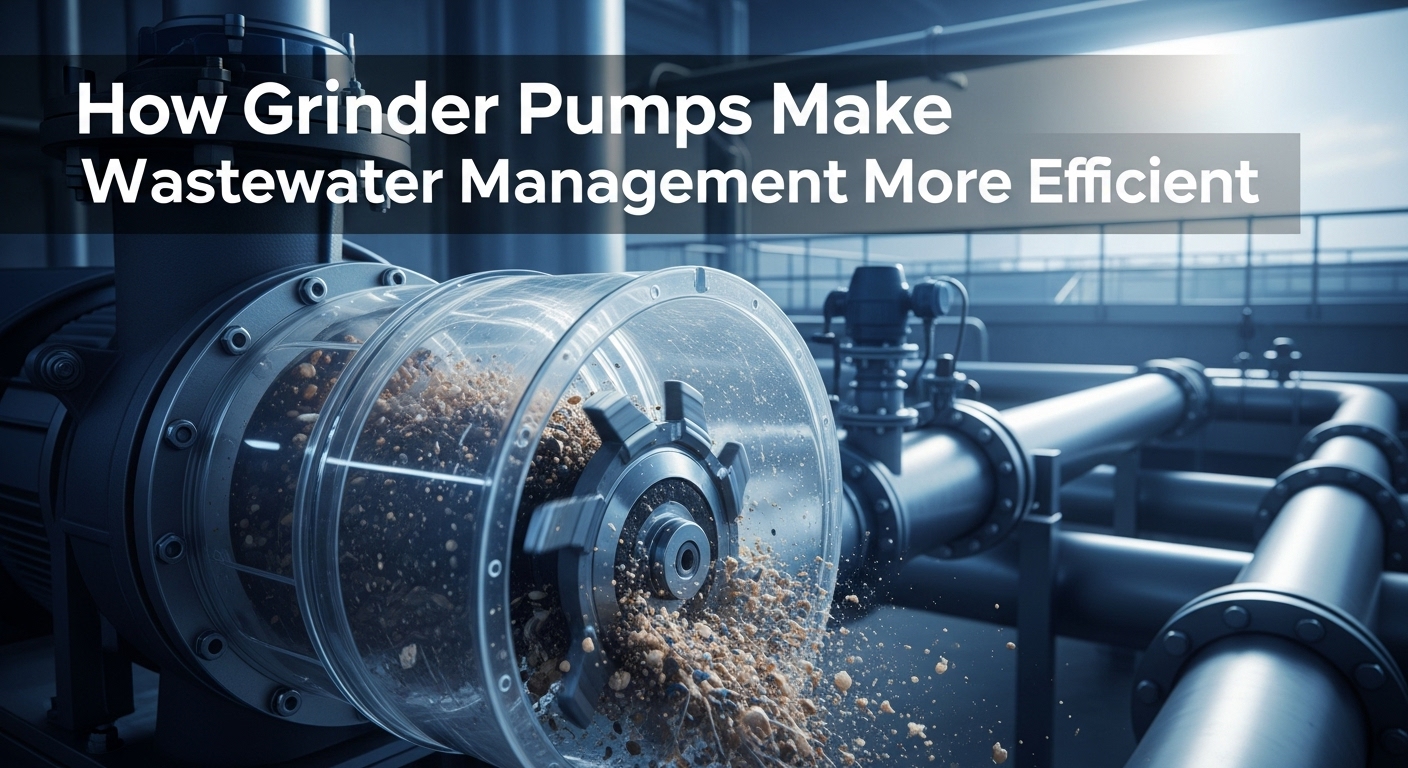
Wastewater management is a critical aspect of modern infrastructure, ensuring that residential, commercial, and industrial effluents are effectively processed and disposed of without harming the environment. Traditional methods often face challenges such as blockages, inefficiencies, and high maintenance costs. Enter grinder pumps—a technological advancement that is revolutionizing the way we handle wastewater. This article delves into how grinder pumps enhance efficiency in wastewater management, offering sustainable and cost-effective solutions for various applications.
Understanding Grinder Pumps
A. Definition and Basic Function of Grinder Pumps
A grinder pump is a type of submersible pump designed to grind solid waste into a fine slurry before pumping it into the sewer system. Unlike standard sewage pumps that can only handle liquids and soft solids, grinder pumps are equipped with cutting mechanisms that shred solid materials, preventing clogs and ensuring smooth wastewater flow.
The grinding mechanism uses rotating cutting blades or burrs to process waste materials including toilet paper, feminine hygiene products, dental floss, and other items that commonly cause blockages in conventional sewage systems. By converting these solids into fine particles suspended in liquid, grinder pumps enable reliable transport through small-diameter discharge lines that would otherwise become clogged.
B. Key Components of a Grinder Pump System
A functional grinder pump system comprises several essential components working together to achieve efficient wastewater processing and transport:
- Grinder Chamber: The initial holding tank where wastewater accumulates. Grinding mechanisms process solids here before discharge. Chamber volume determines the interval between pump cycles and affects system responsiveness to varying flow rates
- Cutting Mechanism (Cutter Head): Rotating cutting blades or burrs that grind solid waste materials into fine particles. Durable hardened steel or specialized alloys withstand abrasive materials and extended operation. Design variations optimize performance for different waste types and flow characteristics
- Submersible Motor: Hermetically sealed motor protected from water exposure. Available in various horsepower ratings (typically 0.5 to 3 HP for residential applications, higher for commercial installations). Thermal protection prevents overheating during continuous operation or flow restrictions
- Impeller and Pump Body: The centrifugal pump component that moves ground wastewater through discharge piping. Designed to handle slurries containing fine solids without erosion or wear. Streamlined passages minimize friction and energy loss
- Check Valve: Prevents backflow of wastewater into the grinder chamber when the pump shuts down. One-way valve maintains system integrity and prevents siphoning effects. Essential for reliable unidirectional flow
- Level Sensors and Controls: Automated monitoring systems that detect wastewater levels triggering pump activation. Float switches or electronic sensors provide reliable level detection. Control panels manage pump operation, including start/stop cycles and safety interlocks
- Discharge Piping: Small-diameter pipes (typically 1-2 inches) carrying slurried wastewater from the grinder pump to municipal sewer connections or treatment facilities. Reduced diameter compared to gravity-based systems due to the processed slurry consistency. Requires proper slope and venting to prevent air locks
- Alarm Systems: Alert mechanisms notifying operators of high water levels, pump failures, or system malfunctions. Prevent overflows and enable rapid response to developing problems. Critical for attended facilities and emergency response protocols
C. How Grinder Pumps Differ from Standard Sewage Pumps
Standard sewage pumps are designed to move wastewater that is mostly liquid with minimal solid content. They lack the cutting mechanisms found in grinder pumps, making them susceptible to clogs when faced with solid waste. Grinder pumps, on the other hand, effectively handle solids by reducing them to a fine slurry, minimizing blockages and maintenance issues.
Key differences include solid handling capability (grinders process solids while standard pumps struggle with debris), discharge line size (grinders enable smaller pipes due to slurry consistency), system complexity (grinders require more sophisticated controls and grinding mechanisms), and maintenance requirements (grinders need periodic cutter blade inspection while standard pumps mainly require filter cleaning).
How Grinder Pumps Work
A. The Grinding Process: Breaking Down Solid Waste
When wastewater enters the grinder pump's holding tank, sensors detect the fluid level. Once it reaches a set point, the pump activates. The cutter mechanism engages, shredding solid waste—including items that might clog traditional pumps—into a fine slurry. This process is essential for preventing pipe blockages and maintaining efficient flow within the system.
The grinding action operates continuously while the pump runs, ensuring complete processing of all materials before they enter the discharge line. Specialized cutter blade designs accommodate varying solid types from fibrous materials to harder items. Multiple grinding stages ensure thorough particle size reduction producing homogeneous slurry meeting transport requirements.
B. Pumping Mechanism: Moving Wastewater Efficiently
After grinding, the submersible pump component transports the slurry through the discharge pipe. The submersible design allows the pump to operate underwater, reducing noise and improving efficiency. Models including submersible pump 1 hp and submersible pump 1.5 hp offer varying power levels to suit different needs.
The centrifugal pumping mechanism creates pressure forcing the processed slurry through discharge lines. Pressure ratings range from 40-100+ PSI depending on discharge distance and elevation requirements. High-efficiency impeller designs minimize energy consumption while maintaining adequate flow rates. Discharge flow rates typically range from 20 to 50+ gallons per minute for residential applications, with larger commercial units delivering 100+ GPM.
C. Integration into Existing Wastewater Systems
Grinder pumps can be integrated into existing wastewater systems with minimal modifications. They are versatile and can replace standard pumps in residential, commercial, or municipal settings, offering immediate improvements in efficiency and reliability.
Installation typically involves placing the grinder pump in a holding tank at the lowest point of the property. Discharge piping connects to municipal sewer lines or treatment facilities. Electrical connections provide power for motor operation. Simple integration enables retrofit applications in existing structures without extensive system redesign. Compatibility with various discharge distances and elevation changes provides flexible deployment options.
Benefits of Using Grinder Pumps
A. Enhanced Efficiency in Wastewater Transport
By grinding solids into a fine slurry, grinder pumps ensure that wastewater moves smoothly through pipes without causing clogs. This enhanced efficiency reduces the energy required to transport wastewater and minimizes wear on the system.
Efficient slurry transport reduces discharge line friction compared to conventional gravity systems moving unprepared waste. Smaller diameter discharge pipes become practical due to slurry homogeneity, reducing material costs and installation complexity. Continuous unobstructed flow prevents backpressure accumulation enabling lower energy consumption for equivalent transport volumes.
B. Prevention of Clogs and Blockages in Sewage Lines
Blockages are a common issue in sewage systems, leading to backups and costly repairs. Grinder pumps mitigate this problem by processing solids before they enter the sewage lines, maintaining unobstructed flow.
Traditional sewage systems experience clogs from fiber materials, hygiene products, and solid waste that accumulate in collection lines. Grinder pumps eliminate these problems through preprocessing, extending the operational life of downstream infrastructure. Reduced clog frequency translates to fewer emergency service calls and reduced property damage from backups.
C. Reduced Maintenance Costs and Downtime
With fewer clogs and mechanical issues, facilities experience less downtime. Maintenance costs decrease as the need for frequent repairs diminishes, providing long-term savings.
Grinder pump systems eliminate expensive pipe cleaning and emergency plumbing repairs required by clogged conventional systems. Reduced downtime maintains facility operations and prevents costly service interruptions. Simplified mechanical design with fewer components requiring service reduces maintenance requirements compared to gravity-based alternatives. Preventive maintenance becomes manageable through simple periodic inspections rather than reactive emergency repairs.
D. Environmental Advantages: Promoting Sustainable Practices
Efficient wastewater management is crucial for environmental protection. Grinder pumps contribute by ensuring that waste is properly processed, reducing the risk of contamination and promoting sustainable practices.
Reliable wastewater transport prevents system overflows contaminating surface waters and groundwater. Complete solids processing before environmental discharge prevents ecological damage from untreated waste. Reduced energy consumption compared to alternative technologies lowers operational carbon footprints. Reliable performance enables proper treatment ensuring environmental compliance and protection of aquatic ecosystems.
E. Versatility in Residential, Commercial, and Municipal Applications
From small homes to large industrial facilities, grinder pumps are adaptable to various settings. Their ability to handle challenging waste makes them ideal for diverse applications.
Residential installations serve single-family homes and small properties. Commercial applications support restaurants, shopping centers, and office buildings. Municipal systems manage city-wide wastewater collection. The ability to process diverse waste streams makes grinder pumps suitable across all scales from compact single-unit installations to networked municipal systems.
Grinder Pumps vs. Traditional Septic Systems
A. Limitations of Conventional Septic Systems
Traditional septic systems rely on natural processes to break down waste, which can be slow and inefficient. They often require significant land space and can pose environmental risks if not properly maintained.
Septic systems require substantial drain field areas limiting property development options. Slow processing creates large tank capacities consuming space. Failure risks from improper maintenance contaminate groundwater causing health hazards. Climate variations affect processing rates reducing reliability. High replacement costs (often $5,000-$25,000) create substantial financial burden when systems fail.
B. Advantages of Grinder Pumps Over Septic Solutions
Grinder pumps offer a compact and efficient alternative. They process waste quickly and can transport it over long distances to central treatment facilities. This reduces the reliance on septic tanks and leach fields, which can contaminate groundwater if they fail.
Grinder systems require minimal space compared to septic drain fields. Rapid processing reduces tank volumes. Remote treatment facility utilization eliminates on-site contamination risks. Reliable grinding prevents solids from reaching receiving waters. Compact design suits properties with limited space or poor soil drainage characteristics. Connection to municipal systems transfers treatment responsibility to professional facilities.
C. Long-Term Cost and Efficiency Comparisons
While the initial investment in a grinder pump system may be higher, the long-term savings in maintenance, efficiency, and environmental protection often outweigh the costs. Grinder pumps provide a more sustainable and cost-effective solution over time.
Initial septic system installation costs $3,000-$7,000 with drain field requiring ongoing maintenance. Replacement costs reach $10,000-$25,000 after 20-30 years. Grinder pump systems cost $2,000-$5,000 initially with significantly lower long-term replacement costs. Reduced maintenance requirements generate 40-60% operational savings compared to septic alternatives. Property value improvements from reliable modern systems add financial benefit. Environmental liability elimination reduces long-term financial risk from contamination events.
Applications of Grinder Pumps
A. Residential Use in Areas with Challenging Terrains
Homes located in low-lying areas or with difficult terrains benefit from grinder pumps. The pumps can move wastewater uphill or over long distances, which standard pumps or gravity-based systems cannot handle efficiently.
Properties in valleys or below municipal sewer elevation require pumping systems for reliable wastewater transport. Sloping terrain prevents gravity-based systems requiring pump assistance. Properties without adequate drain field space utilize grinder systems connecting to distant municipal treatment facilities. Remote properties benefit from efficient transport to central treatment eliminating on-site environmental risks.
B. Commercial and Industrial Settings Requiring Robust Solutions
Industries producing heavy waste loads need reliable systems. Slurry pumps and submersible slurry pumps are ideal for handling abrasive or solid-laden fluids in these environments.
Restaurants generating substantial grease and food waste require grinder systems preventing clogging from food solids. Laundry facilities with lint-heavy wastewater benefit from grinding mechanisms. Processing plants handling industrial waste need heavy-duty equipment. Manufacturing facilities generating sediment-laden water require robust systems. Commercial complexes with high occupancy benefit from reliable, low-maintenance grinder systems supporting continuous operations.
C. Municipal Wastewater Management and Infrastructure
Cities and towns use grinder pumps to enhance their wastewater infrastructure. The pumps help manage large volumes of waste, reduce the risk of overflows, and improve the overall efficiency of sewage treatment plants.
Lift stations throughout municipal systems use grinder technology preventing clogs in collection lines. Remote locations connected to central treatment facilities utilize grinder systems ensuring reliable transport. Peak flow management benefits from efficient grinding reducing system strain. Old infrastructure with small-diameter lines utilizes grinders enabling higher flow handling. Aging systems upgrade reliability through modern grinder technology.
Selecting the Right Grinder Pump
A. Factors to Consider: Capacity, Durability, and Power Requirements
Choosing the right pump involves assessing several critical factors:
- Flow Capacity: Determine average and peak wastewater volumes. Residential homes typically require 40-50 GPM capacity. Commercial applications demand 75-150+ GPM. Undersized units cannot manage peak flows while oversized systems waste energy. Calculate based on occupancy and water usage patterns
- Horsepower Requirements: Select motor power matching flow and pressure requirements. Residential applications typically use 0.75-1.5 HP motors. Longer discharge distances and higher elevations require more powerful units. Higher horsepower increases electricity costs but ensures reliable performance under demanding conditions
- Head (Pressure) Requirements: Calculate discharge elevation above grinder pump and friction losses in piping. Standard residential installations require 20-40 feet of head. Long-distance discharge or high elevation gain necessitate higher-pressure pumps. Accurate calculations prevent inadequate performance
- Durability and Materials: Select corrosion-resistant components for extended lifespan. Stainless steel and hardened steel cutting mechanisms withstand extended operation. Quality seals and bearing materials prevent premature failure. Durable construction justifies higher initial cost through extended service life
- Reliability and Brand Reputation: Choose manufacturers with established track records of quality and customer support. Warranty coverage and parts availability affect long-term ownership costs. Customer reviews provide insight into real-world performance and reliability
- Ease of Installation and Maintenance: Select systems with straightforward installation procedures. Accessible components simplify maintenance and repairs. Clear documentation and support resources facilitate proper operation
- Energy Efficiency: Compare power consumption across equivalent models. More efficient designs reduce operating costs. Variable frequency drive compatibility enables speed adjustment optimizing efficiency. Energy-efficient operation reduces environmental impact
- Future Scalability: Consider whether systems can be upgraded or expanded. Compatibility with monitoring and control systems future-proofs installations. Modular designs enable capacity expansion without complete replacement
B. Importance of Professional Installation and Maintenance
Proper installation ensures the system operates efficiently. Regular maintenance by professionals prevents issues and extends the pump's lifespan.
Professional installation confirms proper sizing, positioning, and connections optimizing performance. Correct electrical setup with appropriate protection devices ensures safe operation. Proper grounding and bonding prevent electrical hazards. Professional technicians identify installation issues before problems develop. Regular maintenance intervals (typically semi-annual or annual) extend equipment life and prevent failures. Professional service identifies wear before component failure prevents catastrophic damage.
C. Leading Brands and Manufacturers in the Industry
When selecting a pump, consider reputable manufacturers offering quality products and comprehensive support. Leading brands include established pump manufacturers specializing in submersible and grinder pump technology.
Established manufacturers provide better warranties typically covering 1-5 years depending on model. Comprehensive customer support ensures proper operation and troubleshooting assistance. Extensive parts availability enables quick repairs. Technical documentation and training support proper installation and maintenance. Manufacturer reputation indicates quality and reliability based on customer experiences.
Future of Wastewater Management with Grinder Pumps
A. Technological Advancements in Grinder Pump Design
Innovations are leading to more efficient, durable, and energy-saving designs. Smart pumps with monitoring capabilities are becoming more common. Advanced materials reduce wear and extend component lifespan. Improved cutting mechanisms handle diverse waste types more effectively. Variable speed drives optimize operation across varying flow conditions. Self-diagnostic systems identify issues before failures occur. Compact designs enable easier installation in space-constrained environments. Enhanced corrosion resistance extends operational life in challenging chemical environments.
B. Integration with Smart Systems and IoT
The Internet of Things (IoT) allows for real-time monitoring and control of pumps, enhancing preventive maintenance and operational efficiency. Smart sensors track operational parameters including run time, flow rates, pressure, and power consumption. Remote monitoring enables facility managers to access system status from any location. Automated alerts notify operators of developing problems enabling rapid response. Analytics platforms identify optimization opportunities and predict maintenance needs. Integration with building management systems enables coordinated facility operations. Cloud-based data storage maintains historical records supporting performance analysis and troubleshooting.
C. Potential Impact on Global Wastewater Management Practices
As urbanization increases, the demand for efficient wastewater solutions grows. Grinder pumps are poised to play a significant role in meeting these global challenges. Expanding populations in developing regions require reliable, affordable wastewater solutions. Grinder technology enables treatment facility connections in areas previously dependent on septic systems. Climate change impacts including increased rainfall and flooding make reliable wastewater management increasingly critical. Aging infrastructure in developed nations requires modernization with improved technology. Water recycling and reuse initiatives benefit from reliable preprocessing enabling water recovery. Global environmental standards increasingly mandate effective wastewater management making grinder solutions essential for compliance. Investment in grinder pump technology supports sustainable development goals including clean water access and environmental protection.
Conclusion
Grinder pumps are transforming wastewater management by offering efficient, reliable, and sustainable solutions. Whether in residential settings requiring submersible sump pumps or large-scale industrial applications needing robust submersible slurry pumps, these systems provide significant benefits over traditional methods. The ability to process solid waste before transport enables reliable operations even in challenging conditions.
The advantages of grinder pump systems extend beyond operational efficiency to encompass environmental protection, cost savings, and long-term sustainability. Properties with difficult terrain, commercial facilities with heavy waste loads, and municipal systems managing large volumes all benefit from grinder technology. The reduced maintenance requirements and extended infrastructure life provide compelling financial justification for adoption.
Modern grinder pumps incorporate smart technologies enabling remote monitoring and predictive maintenance. Future developments promise even greater efficiency, reliability, and integration with comprehensive water management systems. As global water challenges intensify from population growth and climate impacts, grinder pump technology will become increasingly important for supporting urban development and environmental protection.
Investing in grinder pumps represents a forward-thinking approach to wastewater management. Organizations and property owners selecting appropriate systems, ensuring professional installation, and implementing comprehensive maintenance programs achieve superior results with reliable long-term performance. Grinder pumps not only address current wastewater challenges but also pave the way for future advancements in environmental stewardship and sustainable infrastructure development globally.