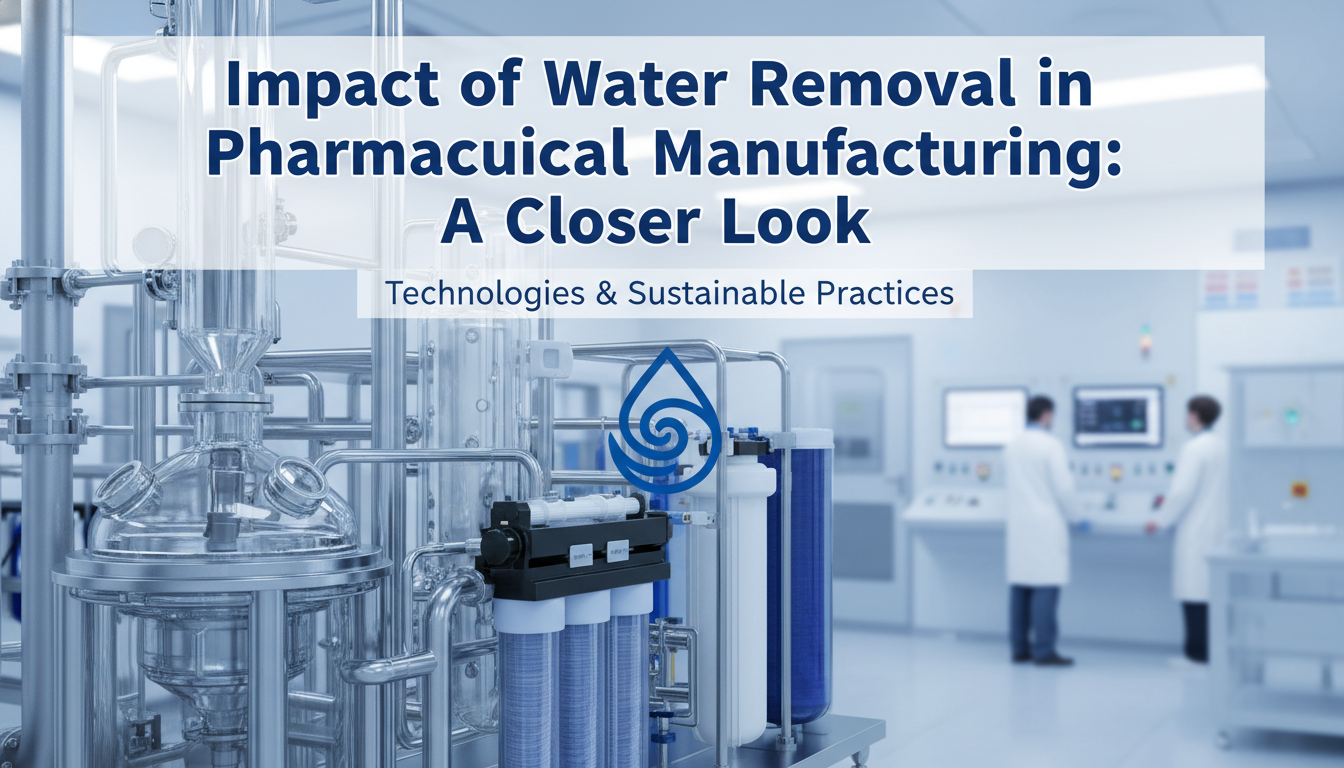
Impact of Water Removal in Pharmaceutical Manufacturing: Technologies and Sustainable Practices
Water is an indispensable resource in pharmaceutical manufacturing, serving not only as a solvent but also as a major ingredient in many formulations. The impact of water removal in pharmaceutical manufacturing is profound, influencing product purity, manufacturing efficiency, and overall environmental sustainability. In this context, efficient water management and advanced removal technologies are critical for pharmaceutical operations. These innovative technologies ensure that the water used during manufacturing processes meets stringent quality standards and is treated properly before being released back into the environment. This comprehensive guide explores the multifaceted role of water in pharmaceutical production, the environmental impacts of its removal, and the advanced technologies employed to treat water and wastewater effectively in pharmaceutical facilities.
The Role of Water in Pharmaceutical Manufacturing
Water used in pharmaceutical manufacturing must adhere to exceptionally high purity standards, as impurities can significantly affect the quality and safety of the final pharmaceutical product. This critical necessity makes water removal and treatment an essential part of the overall manufacturing process in pharmaceutical facilities. Water removal technologies are not just about extracting water from pharmaceutical processes; they're about maintaining its quality throughout the entire production cycle and ensuring regulatory compliance.
Multiple Roles of Water in Pharmaceutical Manufacturing
In pharmaceutical manufacturing, water serves multiple critical roles that require careful management and quality control. Water acts as a primary solvent in dissolving active pharmaceutical ingredients and excipients. Water is used as a cleaning agent in equipment sanitation between production runs. Water participates directly as an ingredient in liquid formulations and oral solutions. Water is employed in cooling systems to maintain optimal manufacturing temperatures. Water serves in humidification systems for controlled environment areas. Water is used in quality testing and analysis procedures. Given these diverse uses throughout pharmaceutical manufacturing, the management of water in pharmaceutical facilities must be meticulously planned and monitored. The World Health Organization provides comprehensive guidelines on the quality of water used for pharmaceutical purposes, ensuring that water is suitable for use at all stages of manufacture and meets international pharmaceutical water standards.
Environmental Impact of Water Removal in Pharmaceutical Manufacturing
The environmental impact of pharmaceutical water removal is significant and multifaceted if not managed properly. Improper water management can lead to the contamination of natural water sources with pharmaceutical residues, which are potent environmental pollutants affecting aquatic ecosystems. These contaminants often include antibiotics, hormones, and other active pharmaceutical substances that can adversely affect aquatic life and potentially enter the human food chain through environmental bioaccumulation. The impact of water removal decisions in pharmaceutical manufacturing extends far beyond facility operations.
Risks Posed by Pharmaceutical Residues in Water Bodies
Pharmaceutical residues in water bodies pose several significant risks to environmental and human health requiring mitigation. Antibiotic resistance can develop in aquatic bacteria when exposed to pharmaceutical residues. Hormonal disruption occurs in aquatic organisms exposed to pharmaceutical compounds. Toxic effects directly impact fish and aquatic plant survival in contaminated waters. Bioaccumulation occurs as pharmaceutical residues concentrate in organisms over time. Potential entry into drinking water supplies poses risks to human populations. Ecosystem disruption results from population changes in affected aquatic communities. Advanced water treatment technologies are essential for mitigating these environmental impacts effectively. Techniques such as reverse osmosis, advanced oxidation processes, and adsorption are employed to remove pharmaceutical contaminants before wastewater is discharged into the environment.
Technologies for Water Removal and Wastewater Treatment in Pharmaceuticals
Efficient water removal and wastewater treatment are crucial in minimizing the environmental footprint of pharmaceutical manufacturing operations. Several advanced technologies are employed in pharmaceutical facilities to achieve high levels of contaminant removal and ensure environmental protection. Reverse osmosis systems remove dissolved solids and many pharmaceutical compounds through semi-permeable membranes. Activated carbon adsorption effectively removes organic pharmaceutical residues from water. Ultrafiltration separates suspended solids and large molecules from pharmaceutical wastewater. Nanofiltration provides selective removal of specific pharmaceutical compounds. Ion exchange resins remove charged pharmaceutical compounds and ionic impurities. Advanced water treatment methods like advanced oxidation technologies and photocatalytic degradation are pivotal in breaking down complex pharmaceutical compounds into less harmful substances. These technologies work synergistically to remove pharmaceutical contaminants before wastewater is discharged into the environment responsibly.
Regulatory and Industry Perspectives on Pharmaceutical Water Management
Navigating the regulatory landscape is essential for pharmaceutical manufacturers to ensure compliance with water management standards and regulations. Pharmaceutical companies must safeguard both public health and the environment through proper water management. The regulatory requirements for water management in the pharmaceutical industry are stringent, reflecting the critical nature of water quality on product efficacy, safety, and environmental protection.
Regulatory Frameworks for Pharmaceutical Water Systems
Globally, regulatory bodies such as the FDA (U.S. Food and Drug Administration) and EMA (European Medicines Agency) set guidelines and standards for pharmaceutical water systems. These comprehensive guidelines ensure that the water used at every stage of pharmaceutical production meets defined purity standards for pharmaceutical manufacturing. The World Health Organization provides extensive guidelines on water quality for pharmaceutical use, emphasizing the critical need for proper water management to prevent contamination. Regulatory compliance requires documentation of water system validation and ongoing monitoring. Regular testing ensures pharmaceutical water meets quality standards. Microbiological testing prevents contamination in pharmaceutical facilities. Chemical analysis verifies purity standards for pharmaceutical water.
Industry Best Practices for Pharmaceutical Water Management
In response to regulatory requirements and environmental concerns, the pharmaceutical industry has adopted several best practices to optimize water usage. Regular maintenance of water systems ensures reliable pharmaceutical manufacturing operations. Implementation of automated monitoring systems provides real-time water quality assurance. Preventive maintenance reduces unexpected system failures in pharmaceutical facilities. Documentation and record-keeping demonstrate regulatory compliance for pharmaceutical operations. Staff training ensures proper handling of water systems in pharmaceutical manufacturing. Regular audits identify areas for improvement in pharmaceutical water management. Investment in employee development enhances system performance and sustainability in pharmaceutical facilities.
Strategic Initiatives for Enhanced Water Stewardship in Pharmaceutical Manufacturing
This section explores strategic initiatives that pharmaceutical companies can adopt and future directions for water management within the pharmaceutical industry. Several comprehensive approaches are emerging to improve pharmaceutical water management practices.
Integrated Water Resource Management in Pharmaceutical Operations
Adopting an integrated approach ensures that pharmaceutical water management is not only efficient but also sustainable. Integrated Water Resource Management (IWRM) for pharmaceutical facilities involves assessing the entire water cycle within pharmaceutical production. This includes supply assessment and optimization for pharmaceutical operations. Usage monitoring tracks water consumption throughout manufacturing processes. Treatment procedures ensure pharmaceutical water meets quality standards. Reuse opportunities maximize water efficiency in pharmaceutical facilities. Discharge management ensures environmental compliance in pharmaceutical wastewater handling.
Enhancement of Wastewater Treatment Facilities
Upgrading existing wastewater treatment facilities with advanced technologies significantly improves efficiency in pharmaceutical manufacturing. Advanced pumping solutions including submersible sewage pumps effectively handle pharmaceutical wastewater. Cutter pumps manage high-load effluent typical in pharmaceutical manufacturing. Modern treatment equipment efficiently removes pharmaceutical contaminants. Enhanced systems improve overall pharmaceutical wastewater treatment effectiveness. Upgraded facilities reduce environmental impact from pharmaceutical operations.
Adoption of Zero Liquid Discharge Systems in Pharmaceuticals
Zero Liquid Discharge (ZLD) systems are designed to completely eliminate liquid waste from pharmaceutical manufacturing. These innovative systems treat and recycle wastewater back into pharmaceutical processes. ZLD implementation minimizes environmental impact from pharmaceutical operations. Complete waste elimination reduces volume of water intake from external sources. This approach supports sustainable pharmaceutical manufacturing practices. ZLD systems represent the future of responsible pharmaceutical water management.
Corporate Water Responsibility in Pharmaceutical Companies
Pharmaceutical companies are increasingly expected to demonstrate corporate water responsibility in their operations. This commitment includes conducting comprehensive water audits of pharmaceutical facilities. Companies set reduction targets for pharmaceutical water consumption. Public reporting of water usage enhances corporate transparency in pharmaceutical manufacturing. Sustainability goals guide pharmaceutical company strategies. Environmental stewardship becomes a competitive advantage for pharmaceutical manufacturers.
Future Directions in Pharmaceutical Water Management
The pharmaceutical industry is moving toward increasingly sophisticated and sustainable water management approaches. Emerging technologies promise even greater efficiency in pharmaceutical water treatment. Investment in research drives pharmaceutical water management innovation. Collaboration between industry and regulators improves pharmaceutical water standards. Global water challenges inspire pharmaceutical innovation and sustainability efforts. Advanced analytics optimize pharmaceutical water system performance. Artificial intelligence predicts maintenance needs in pharmaceutical facilities. Real-time monitoring enhances pharmaceutical water quality assurance. Blockchain technology may improve pharmaceutical water supply chain transparency. These future directions position the pharmaceutical industry as a leader in sustainable water management practices.
Conclusion: Water Removal Impact on Pharmaceutical Manufacturing and Environmental Protection
The impact of water removal in pharmaceutical manufacturing extends beyond just operational efficiencies; it plays a pivotal role in environmental conservation and regulatory compliance for pharmaceutical operations. As water scarcity issues continue to emerge globally, the pharmaceutical industry's commitment to innovative water treatment technologies and sustainable practices is more crucial than ever. These comprehensive efforts not only ensure the production of high-quality pharmaceuticals but also protect our most vital resource, water.
This comprehensive guide has explored the multifaceted role of water in pharmaceutical manufacturing and the critical impact of water removal strategies. We examined advanced technologies for effective water management and the industry's movement towards more sustainable practices in pharmaceutical water treatment. Such comprehensive management of water is not just beneficial but essential for the future of pharmaceutical manufacturing. Proper water management safeguards environmental health and public wellbeing.
Pharmaceutical companies that prioritize water stewardship through innovative technologies, regulatory compliance, and sustainable practices position themselves as leaders in responsible manufacturing. The impact of water removal decisions made today will shape the pharmaceutical industry for decades to come. By embracing advanced water treatment technologies and committed to environmental protection, pharmaceutical manufacturers ensure both product quality and environmental sustainability for future generations.