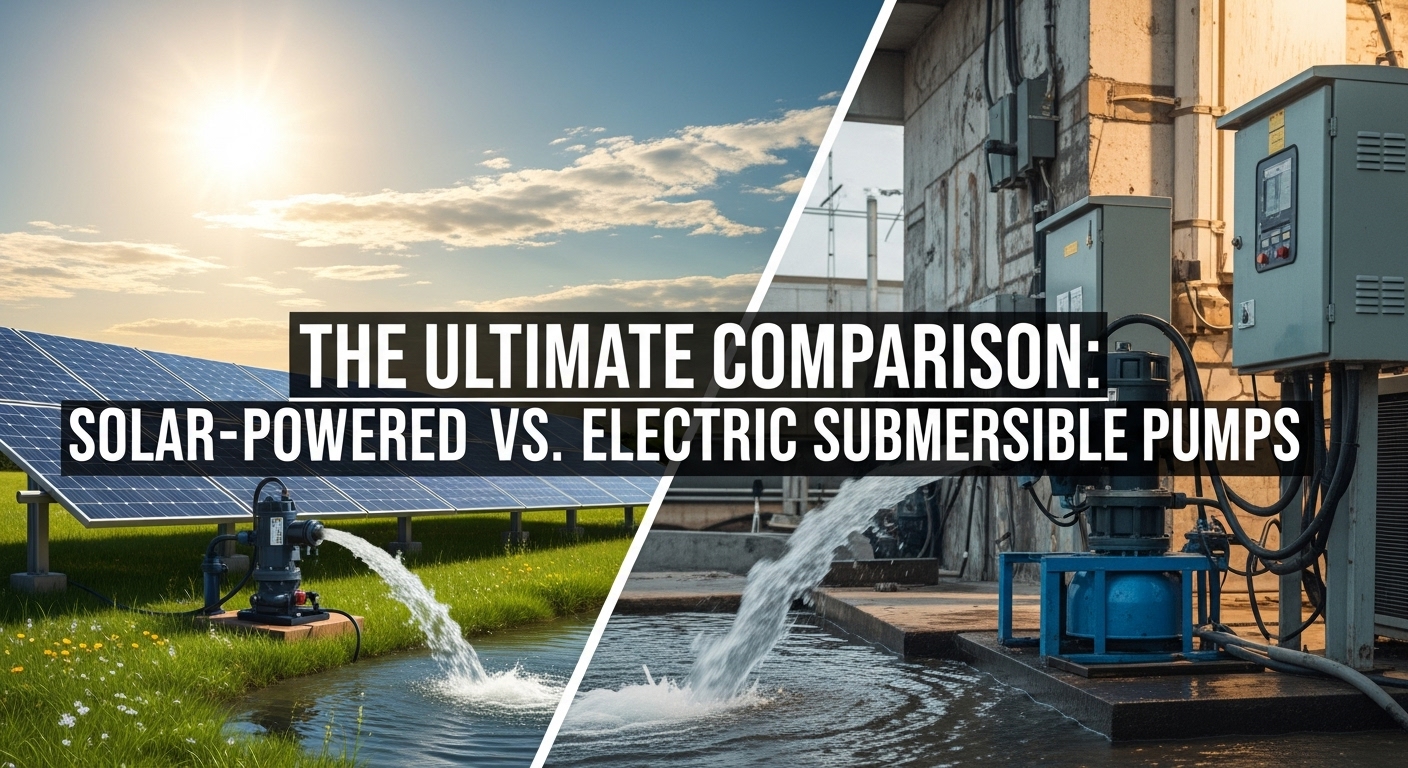
Choosing between solar-powered and electric submersible pumps is a critical decision for anyone involved in industries like agriculture, construction, or wastewater management. Both options offer unique advantages and are suited for different applications.
In this guide, we will explore the features, costs, efficiency, and maintenance of submersible pumps, helping you determine the best choice for your needs.
Key Takeaways
Overview of Submersible Pumps
What Are Submersible Pumps?
A submersible pump is a type of pump designed to operate while fully submerged in water or other liquids. These pumps are hermetically sealed to prevent water from entering the motor and are widely used across various industries for efficient fluid transfer.
Applications of Submersible Pumps
Types of Submersible Pumps
| Submersible Water Pump | Moves clean water effectively | Irrigation, household water supply | Submersible Sewage Pump | Handles wastewater and solid particles | Sewage treatment, industrial wastewater | Dewatering Pump | Removes water from flooded areas | Flood control, construction sites | Slurry Pump | Transfers thick liquids with solids | Mining, dredging, industrial processes | Submersible Agitator Pump | Mixes and pumps liquids containing solids | Sludge handling, slurry applications |
Cost Analysis: Solar vs Electric Submersible Pumps
Upfront Investment Costs
Solar-powered submersible pumps have a higher initial cost due to the inclusion of solar panels, batteries, charge controllers, and installation equipment. However, they eliminate recurring electricity expenses, making them more economical over time.
| Initial Purchase | $1,000 - $5,000 | $500 - $2,500 | Installation | $500 - $1,000 | $200 - $500 | Long-Term Operating Costs (Annual) | Minimal ($50-$100 for maintenance) | $200 - $1,000 (electricity) |
Long-Term Cost Efficiency
Electric submersible pumps, such as the submersible pump 1 hp, have higher operating costs due to continuous electricity consumption. Over a 10-year period, solar-powered pumps typically provide a return on investment of 40-60%, making them significantly more cost-effective despite the higher upfront investment.
Efficiency Comparison
Solar-Powered Submersible Pumps
Electric Submersible Pumps
Environmental Impact
Advantages of Solar-Powered Pumps
Disadvantages of Electric Pumps
Installation and Maintenance
Solar-Powered Submersible Pumps
Installation Requirements:
Maintenance Needs:
Electric Submersible Pumps
Installation Requirements:
Maintenance Needs:
| Solar Submersible Pumps | Moderate to High | Low | Electric Submersible Pumps | Low | Moderate to High |
Key Applications
Best Use Cases for Solar-Powered Submersible Pumps
Best Use Cases for Electric Submersible Pumps
Pros and Cons Comparison Table
| Upfront Cost | High ($1,500-$6,000) | Moderate ($700-$3,000) | Long-Term Savings | Significant (40-60% ROI over 10 years) | Minimal | Environmental Impact | Low (zero emissions) | High (carbon footprint) | Performance in Remote Areas | Excellent | Limited (requires grid access) | Power Reliability | Weather-Dependent | Constant | Maintenance | Low | Moderate to High | Installation Complexity | Moderate to High | Low | Operating Costs | Minimal | $200-$1,000/year |
Future Trends in Submersible Pumps
Solar Technology Innovations
Electric Pump Advancements
Making the Right Choice: Decision Factors
Choosing between solar-powered and electric submersible pumps depends on several critical factors:
Conclusion
Both solar-powered and electric submersible pumps offer distinct advantages depending on your specific needs and circumstances. Solar pumps provide exceptional long-term value with minimal operating costs and environmental impact, making them ideal for remote locations and sustainability-focused operations. Electric pumps deliver consistent, high-performance pumping for industrial and municipal applications where grid power is readily available.
Evaluate your requirements, location, budget, and environmental goals to make an informed decision. Whether you need a submersible drainage pump or a cutter pump sewage, selecting the right pump type can significantly improve efficiency, reduce costs, and support your operational objectives.
For expert guidance on selecting the perfect submersible pump for your application, consult with industry professionals who can assess your specific requirements and recommend the optimal solution for maximum performance and value.