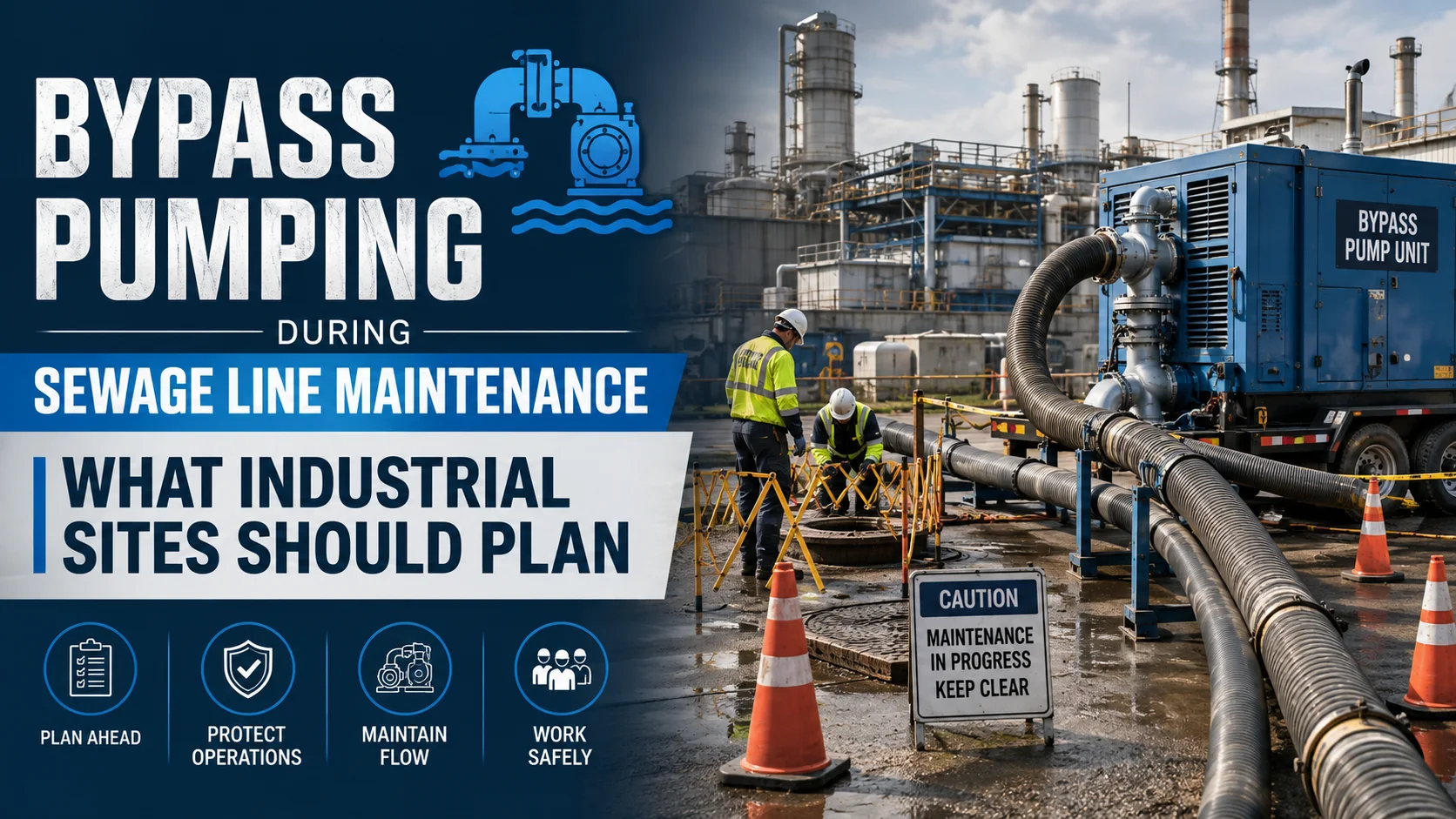
Plan bypass pumping during sewage line maintenance with the right flow assumptions, standby logic, hose routing and risk controls for industrial and wastew
Industrial sites should plan sewage bypass pumping by verifying real flow, choosing the right pump type for solids, protecting against blockage and power failure, and designing the temporary routing to avoid leaks, backflow and unsafe access. Temporary pumping still needs engineered risk control.
Why bypass pumping deserves serious planning
Temporary pumping is often arranged under schedule pressure, but the risk can be high. If the bypass fails, the result may be overflow, contamination, shutdown or unsafe manual intervention.
- Actual flow may exceed assumptions during rain, process change or shift peaks.
- Temporary routing can create friction loss or obstruction.
- Solids behavior can be worse than expected during disturbance.
Step 1: define the real temporary duty
Before selecting a bypass pump, confirm what the temporary system must actually handle.
- Normal flow and peak flow.
- Expected solids and fibrous load.
- Required pumping distance and elevation change.
- Duration of the bypass event.
- Whether the work is planned maintenance or emergency intervention.
Step 2: choose the right pump approach for the liquid profile
Temporary duty still requires the right pump geometry.
- A submersible sewage sludge pump style unit may fit many sewage bypass duties.
- If the stream is fibrous or prone to choking, a submersible cutter pump may be worth reviewing.
- For lighter contaminated water, a submersible waste water pump may be sufficient if solids risk is truly low.
Step 3: plan temporary routing carefully
A temporary bypass line can create its own failures if routing is rushed.
- Hose or pipe length and diameter.
- Number of bends and fittings.
- Vehicle or pedestrian crossing risk.
- Protection against hose movement or vibration.
- Safe discharge location and backflow prevention.
Step 4: build standby and alarm protection into the bypass
Temporary pumping should not rely on a single point of failure when overflow consequences are serious.
- Standby pump or fast-change backup plan.
- Power backup where grid reliability is weak.
- High-level alarm or visual monitoring.
- Operator response plan if the duty changes suddenly.
Step 5: review site safety and environmental risk
Temporary pumping often creates extra hazards around hoses, pits, exposed liquids and manual intervention zones.
- Access control around hoses and wet areas.
- Spill response planning.
- Isolation during line opening or repair.
- Safe lifting and cable management.
Bypass pumping checklist for industrial sites
- Real flow and peak flow estimated.
- Solids-handling fit reviewed.
- Hose route checked for loss and obstruction.
- Backup pump or contingency ready.
- Alarm and monitoring plan defined.
- Safe discharge and spill control confirmed.
Common mistakes in temporary bypass work
- Sizing for average flow only.
- Ignoring solids and fibrous material.
- Underestimating friction loss in long hose runs.
- Running without backup power or standby strategy.
- Treating emergency temporary pumping as casual maintenance support.
Frequently asked questions
Is bypass pumping only for emergency situations?
No. It is commonly used for planned maintenance, line replacement, pit cleaning and temporary shutdown work as well as emergencies.
Can I use any dewatering pump for sewage bypass?
Not safely. The pump should match the actual solids and fibrous load. A clean-water or light-duty dewatering unit may not handle sewage reliably.
Why is standby planning important in temporary bypass pumping?
Because a temporary setup often has less resilience than a permanent station. If the single pump stops, overflow risk can rise very quickly.
Do temporary hose routes affect pump performance?
Yes. Hose length, bends, elevation and restrictions all change friction loss and can affect the real duty seen by the pump.
Should bypass pumping include alarm monitoring?
Yes, especially when overflow or process interruption has material consequences. Temporary pumping still needs clear response signals.
Can Flow Chem size a bypass pump without site details?
No. Final selection should follow the real flow, solids profile, route length, elevation and contingency requirements of the job.
Need help selecting the right pump?
Share your flow, head, liquid type, solids, site layout and duty cycle with Flow Chem Pumps. Our team can help you shortlist the right pump.