Learn how to select a dewatering pump for construction, mining and municipal drainage sites. Compare flow, head, solids, sump depth, power source and servi
The right dewatering pump is selected by matching the pump to the site water condition, required discharge rate and total head. Start with the application: construction excavation, mine pit, municipal drain, flood-prone sump, STP drainage area or industrial site. Then define the water volume, inflow pattern, head, solids, silt, cable length, power availability and expected operating hours.
For many construction, municipal and industrial drainage duties, the first option to evaluate is a dewatering pump or submersible drainage pump. For mining and quarry duties, compare the requirement with Flow Chem’s mining pumps and confirm whether the water includes abrasive slurry, silt or larger solids.
A pump should not be chosen only by HP. A 1 HP dewatering pump may be suitable for smaller sumps, low-head drainage or localized water removal, but a larger construction or mining site may need higher flow, higher head, better wear resistance, standby capacity or multiple pumps.
Why dewatering pump selection matters
Dewatering is often treated as a temporary site activity, but the wrong pump can delay civil work, damage equipment, increase maintenance calls and create safety issues. On construction sites, water accumulation can stop excavation, foundation work, basement work and trench activity. In mining and quarry operations, poor dewatering can reduce access, affect productivity and increase equipment wear. In municipal sites, drainage failure can cause flooding, public complaints and emergency response costs.
The goal is not simply to remove water. The goal is to keep the site workable by moving the expected inflow reliably at the required head while handling the actual site conditions. That includes dirty water, sand, silt, sludge, occasional debris, long running hours and difficult access.
A correct dewatering pump selection improves:
- Site uptime and work continuity.
- Pump life and maintenance predictability.
- Drainage speed during peak inflow.
- Safety around excavations, pits and sumps.
- Energy and operating cost.
- Confidence during monsoon or emergency drainage.
Step 1: define the dewatering application
Start by identifying where the pump will work. Dewatering applications vary widely, and the best pump for a basement pit may not be correct for a quarry or municipal drainage sump.
Common applications include:
- Construction excavation dewatering.
- Basement and foundation pit drainage.
- Trench and pipeline dewatering.
- Mining and quarry pit water removal.
- Municipal stormwater or drain pumping.
- Industrial site sump drainage.
- STP and wastewater plant drainage areas.
- Flood-prone area water removal.
The application decides the pump type, duty cycle and construction. For example, a construction trench may need portability and fast deployment, while a mining sump may need abrasion resistance and continuous-duty performance.
Step 2: estimate inflow and required flow rate
Flow rate decides how fast the pump must remove water. A common mistake is selecting a pump based only on the visible water level without estimating ongoing inflow. If the site receives continuous seepage, groundwater, rainwater or process discharge, the pump must handle both stored water and incoming water.
Document these details:
- Approximate water volume to remove.
- Expected inflow rate during normal conditions.
- Peak inflow during monsoon, storm or process discharge.
- Required time to empty the sump or pit.
- Whether the site needs one pump or duty/standby pumps.
- Whether multiple pumps will operate together.
For a small localized sump, a lower-capacity pump may work. For excavation, mining or municipal sites, sizing should consider peak inflow and safety margin. If the pump is undersized, water level will continue rising even while the pump is running.
Step 3: calculate total dynamic head
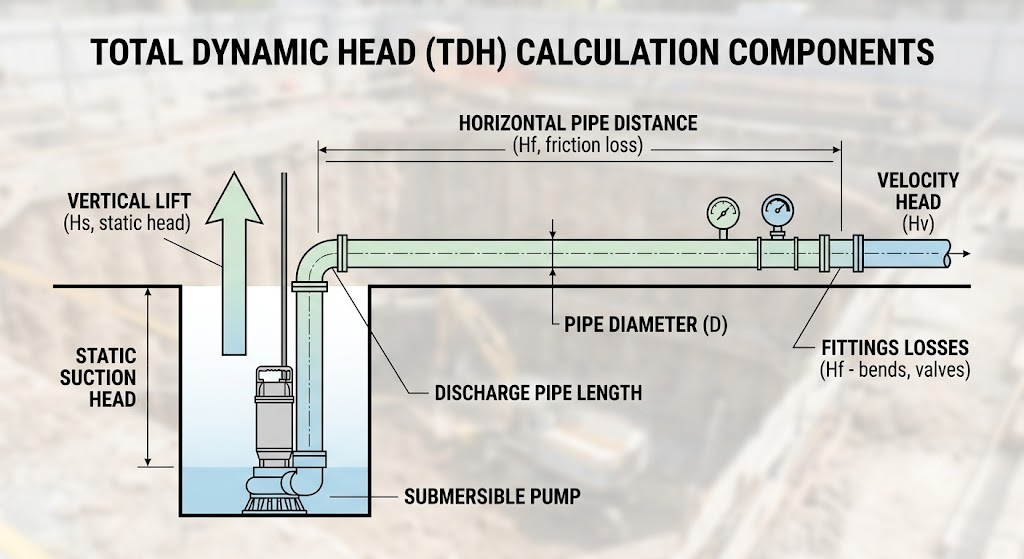
Total dynamic head is the full resistance the pump must overcome. It includes vertical lift, pipe friction, hose length, bends, valves and discharge conditions. For dewatering, this is critical because long hoses and temporary pipe layouts can add significant friction loss.
Include:
- Vertical lift from water level to discharge point.
- Horizontal hose or pipe distance.
- Pipe diameter or hose diameter.
- Bends, valves, couplings and fittings.
- Discharge point pressure or elevation.
- Variation in water level as the pit empties.
If head is underestimated, the pump may deliver much less flow than expected. If head is overestimated, the pump may operate inefficiently or outside the desired duty range. The pump curve should match the site duty point, not just the motor HP.
Step 4: check solids, silt and abrasiveness
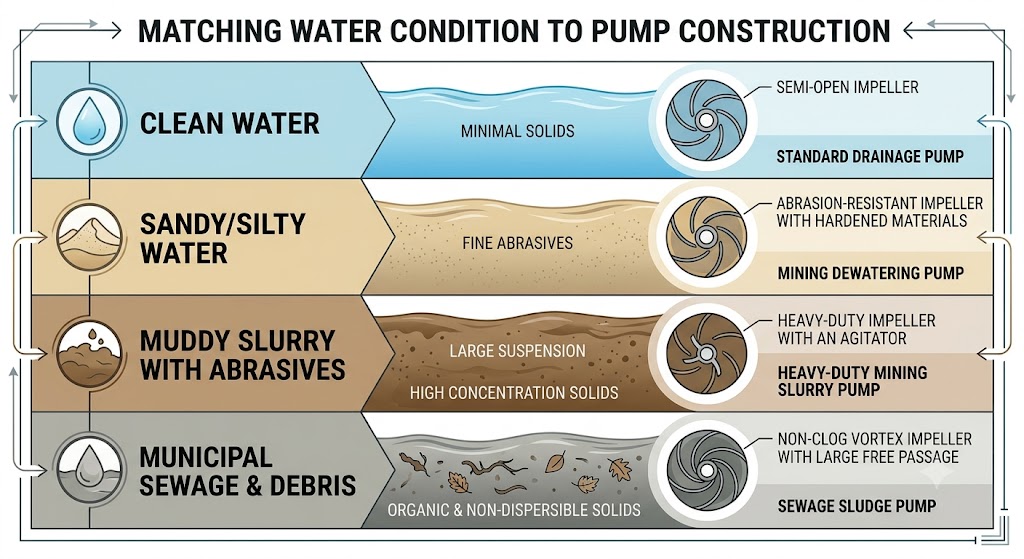
Dewatering water is rarely clean. Construction and mining sites may contain sand, silt, clay, grit, stones, slurry-like material or debris. Municipal drainage water may contain leaves, plastic, sludge or other solids. These conditions affect impeller selection, free passage, wear resistance and maintenance frequency.
Check:
- Is the water clean, sandy, silty, muddy or sludge-like?
- What is the expected particle size?
- Is the material abrasive?
- Is there risk of clogging from leaves, plastic or debris?
- Will the pump run in a settling pit or directly in dirty water?
- Is a strainer, screen or sump design needed?
For dirty water and drainage duties, review a submersible drainage pump. For heavier sludge or sewage-type solids, compare the duty with a submersible sewage sludge pump instead of forcing a standard dewatering pump into the wrong application.
Step 5: decide between submersible, drainage and diesel dewatering options
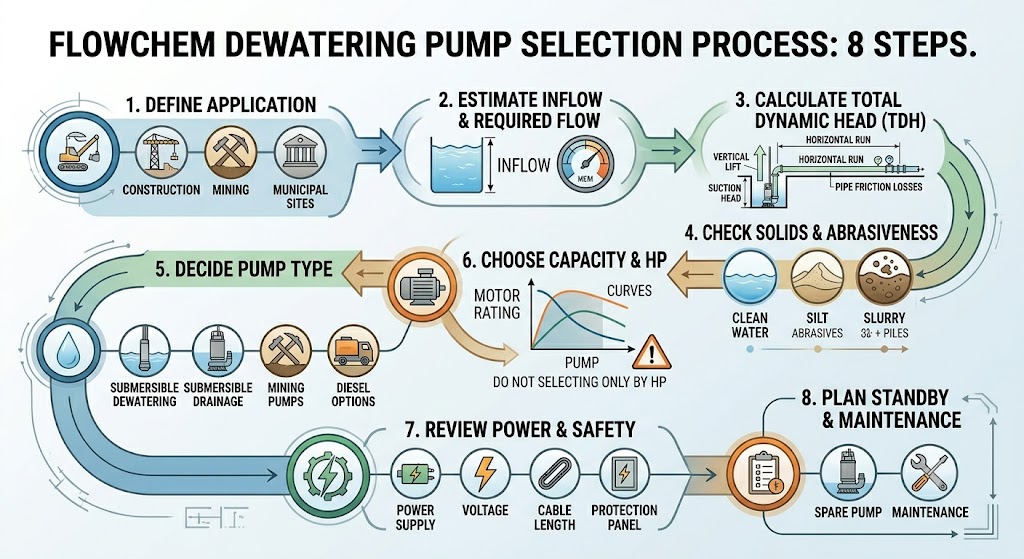
The pump type depends on site conditions and power availability.
Submersible dewatering pump: suitable when the pump can be placed directly in the pit, sump, excavation or drainage area. It is commonly used for construction, industrial and municipal dewatering because it saves suction-lift issues and can operate from inside the water source.
Submersible drainage pump: suitable for drainage water, rainwater, site water and dirty water with manageable solids. It is useful for construction and infrastructure sites where quick water removal is needed.
Mining dewatering pump: suitable where the water may contain silt, abrasive particles or tougher duty conditions. Mining sites often need stronger construction, careful material selection and continuous-duty planning.
Diesel dewatering pump: considered when electric power is not available, unreliable or unsuitable for the site. This term has low keyword difficulty in the current competitor dataset, but product fit must be confirmed before publishing strong commercial claims. If Flow Chem does not sell or support diesel dewatering pumps, this topic should be handled as a buyer consideration, not a product promise.
Step 6: choose pump capacity and HP carefully
Many buyers ask for a pump by HP, such as a 1 HP dewatering pump. HP is important, but it does not define performance by itself. Two pumps with the same HP can deliver different flow and head depending on design, impeller, efficiency and duty point.
A 1 HP dewatering pump may be suitable for:
- Small sumps.
- Localized water removal.
- Low to moderate head applications.
- Intermittent drainage.
- Light construction support.
A larger or more specialized pump may be needed for:
- Deep excavation.
- Long discharge distance.
- High inflow.
- Mining or quarry dewatering.
- Continuous running.
- High silt or abrasive water.
- Municipal or emergency drainage.
The safest selection process is to calculate flow and head first, then shortlist the motor rating and model.
Step 7: review power, cable and site safety
Dewatering pumps often operate in temporary, wet and harsh environments. Electrical and installation details matter as much as hydraulic performance.
Review:
- Power supply availability and phase.
- Voltage stability.
- Cable length and protection.
- Starter/control panel requirement.
- Earthing and electrical safety.
- Pump lifting and lowering arrangement.
- Safe discharge routing.
- Dry-run or overload protection where applicable.
If the site has unstable power, long cable runs or emergency drainage needs, discuss the operating environment before final selection.
Step 8: plan standby capacity and maintenance
For critical sites, one pump may not be enough. Construction and municipal projects often need standby capacity because pump failure during peak water inflow can stop work quickly.
Plan for:
- Duty/standby arrangement.
- Spare pump availability.
- Periodic cleaning of strainer or suction area.
- Inspection of cable, seals and impeller.
- Availability of service and spare parts.
- Safe access for pump removal.
The pump should be easy to inspect and service. A low-cost pump that fails during monsoon or excavation work can cost more than a correctly selected pump with reliable support.
Common mistakes to avoid
Avoid these mistakes when selecting a dewatering pump:
- Selecting only by HP and ignoring pump curve.
- Underestimating total dynamic head.
- Ignoring long hose or pipe friction.
- Treating sandy or silty water as clean water.
- Using a light-duty pump for mining or abrasive water.
- Not planning standby capacity.
- Not checking power availability and cable requirements.
- Choosing a pump without service or spare support.
- Publishing diesel pump requirements without confirming product availability.
Dewatering pump selection checklist
Before sending a procurement enquiry, collect:
- Application: construction, mining, municipal, industrial, STP or flood drainage.
- Water type: clean, dirty, sandy, silty, abrasive or sludge-like.
- Required flow rate.
- Total dynamic head.
- Sump or pit depth.
- Discharge pipe or hose length and diameter.
- Solids and debris profile.
- Required operating hours.
- Power supply details.
- Need for standby pump.
- Site access and lifting arrangement.
- Maintenance and service expectations.
When to ask Flow Chem for selection support
If the site has uncertain inflow, deep excavation, abrasive mine water, high silt load or municipal drainage risk, ask for manufacturer selection support before procurement. Flow Chem can review application data and help shortlist suitable dewatering, drainage, wastewater or mining pump options.
For selection support, share flow rate, head, pit depth, pipe length, water condition, solids, operating hours, power supply and project location through the Flow Chem contact page. For dewatering-specific applications, start with Flow Chem’s dewatering pumps page and compare related submersible drainage pump options.
Frequently asked questions
Which pump is best for construction dewatering?
For many construction dewatering duties, a submersible dewatering or drainage pump is suitable because it can operate directly inside the pit, trench or sump. Final selection depends on flow rate, head, solids, power supply and operating hours.
How do I size a dewatering pump?
Size a dewatering pump by calculating required flow rate and total dynamic head, then matching the duty point to the pump curve. Also check solids, silt, abrasiveness, sump depth, pipe length and power availability.
Is a 1 HP dewatering pump enough?
A 1 HP dewatering pump may be enough for smaller sumps, low-head drainage and localized water removal. It may not be enough for deep excavation, high inflow, long discharge distance, mining water or continuous-duty municipal drainage.
What is the difference between a dewatering pump and a drainage pump?
A dewatering pump is selected to remove unwanted water from sites such as excavations, mines and sumps. A drainage pump is often used for general dirty-water or rainwater drainage. The terms can overlap, but final selection should be based on flow, head, solids and duty cycle.
Can a dewatering pump handle muddy or silty water?
Some dewatering pumps can handle dirty or silty water, but abrasive or heavy solids require careful pump selection. Check impeller design, material, free passage, wear resistance and strainer design before using a pump in muddy or mining water.
When should I consider a diesel dewatering pump?
A diesel dewatering pump may be considered when electric power is unavailable, unreliable or unsuitable for the site. Before publishing or buying around this requirement, confirm whether the manufacturer supplies or supports diesel dewatering equipment for the application.
Need help selecting the right pump?
Share your flow, head, liquid type, solids, site layout and duty cycle with Flow Chem Pumps. Our team can help you shortlist the right pump.