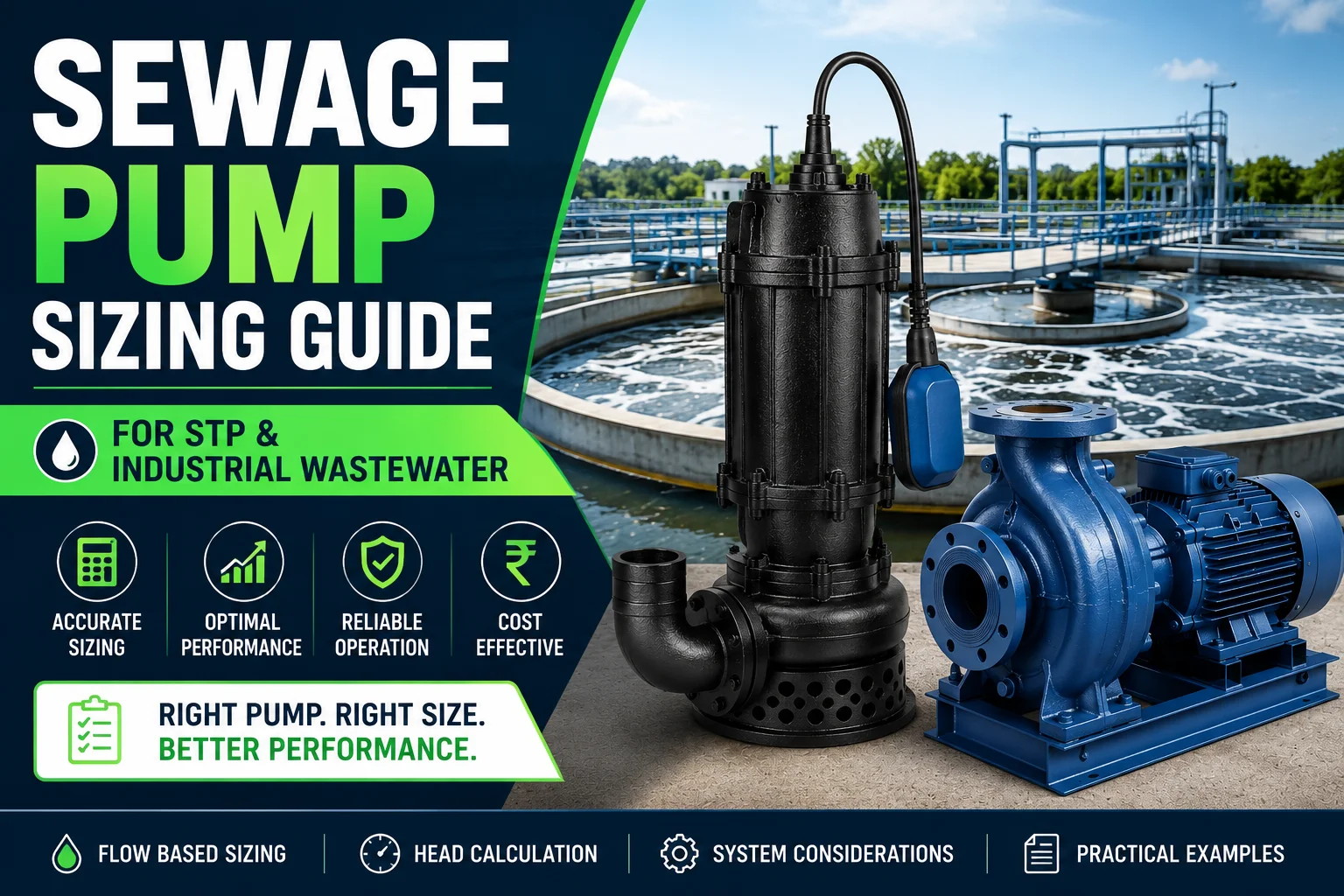
Learn how to select industrial wastewater treatment pumps for STP and ETP projects. Compare liquid type, solids, head, chemistry, duty/standby and maintena
Select the pump by matching it to the treatment stage and liquid condition. Industrial wastewater treatment can include raw influent, screened wastewater, equalization transfer, sludge movement, treated effluent discharge, recycle loops and emergency bypass duties.
In most projects, the buyer should shortlist the pump route after answering three questions:
1. What liquid is being moved? 2. How many solids, fibres or abrasive particles are present? 3. What flow, head and duty cycle does the process actually require?
For broad wastewater transfer, Flow Chem’s submersible waste water pump route is the main starting point. For treated discharge, compare effluent pumps. For sludge or sewage solids, review the submersible sewage sludge pump page. If rags or fibrous waste cause repeated clogging, review submersible cutter pump selection as well.
What is industrial wastewater treatment pump selection?
Industrial wastewater treatment pump selection is the process of choosing the correct pump type, material and duty rating for each liquid-handling stage inside an STP, ETP or process wastewater system.
It is not a single-pump decision. A treatment plant can have several pumping needs:
- Influent transfer from collection pits or sumps.
- Lift from a low point to an equalization tank.
- Transfer between treatment stages.
- Sludge return or sludge wasting.
- Treated effluent discharge.
- Bypass or emergency pumping.
- Aeration or mixing support where a dedicated mixing solution is required.
The correct pump depends on what the liquid contains at that stage. Raw wastewater, aerated mixed liquor, clarified effluent and settled sludge behave very differently.
Stage 1: identify the treatment stage
The fastest way to avoid wrong selection is to map the process stage first.
Raw influent or collection sump
Raw influent usually contains solids, grit, organic matter and unpredictable debris. This stage often needs robust wastewater handling and clogging resistance.
Equalization tank or transfer pit
Equalization duties may still contain solids, but the liquid is usually more uniform than raw influent. The pump should be selected for the actual solids profile and level variation.
Secondary treatment and recirculation
Some treatment loops move mixed liquor or partially treated liquid. This may require different materials and operating behaviour than a general sewage pump.
Treated effluent discharge
If solids are reduced and the liquid is relatively cleaner, an effluent pump may be more appropriate than a heavy sewage-sludge route.
Sludge transfer or sludge wasting
Sludge is heavier, thicker and more demanding than lighter wastewater. This stage often needs sludge-focused selection rather than a standard effluent pump.
Bypass or emergency pumping
Bypass duty usually prioritises reliability, fast deployment and robust solids handling.
Stage 2: define the liquid type
Industrial wastewater is a broad term. It may mean any of the following:
- Process wastewater.
- Screened wastewater.
- Sewage mixed with industrial discharge.
- Sludge-rich liquid.
- Treated or semi-treated effluent.
- Oily water.
- Chemically influenced liquid.
- Grit-laden or abrasive wastewater.
Do not finalize pump selection until the liquid type is known.
Ask:
- Is it raw, screened, semi-treated or treated?
- Does it behave like sewage, sludge or effluent?
- Does it contain grit, fibres, rags, wipes, plastics or suspended solids?
- Is the liquid chemically aggressive?
- Is settling or scum formation expected in the pit?
If the answer suggests heavy solids or ragging, review submersible sewage sludge pump or submersible cutter pump routes. If the liquid is cleaner, effluent pumps or submersible waste water pump routes may be more appropriate.
Stage 3: calculate flow and total dynamic head
Once the liquid is known, the pump must be matched to the hydraulic duty.
Review:
- Required flow rate.
- Static lift.
- Pipe length.
- Pipe diameter.
- Number of bends.
- Valve losses.
- Final discharge condition.
- Operating hours per day.
- Peak and average flow.
- Emergency inflow condition.
A pump that looks suitable on paper may still fail if the actual total dynamic head is underestimated. This is especially important in plants with long discharge runs, elevated tanks or multiple treatment levels.
Stage 4: review solids, ragging and clogging risk
Solids are one of the biggest selection drivers in wastewater treatment.
Low-solids or treated liquid
If solids are low and the liquid is relatively clean, the buyer can focus more on materials, head and chemistry.
Normal sewage or mixed wastewater solids
If the liquid contains standard sewage solids, a sewage or sludge route is usually more relevant.
Fibrous or ragging-prone waste
If the liquid contains wipes, cloth, stringy waste or plastics, clogging risk rises sharply. In that case, a cutter pump should be reviewed instead of assuming a standard wastewater pump will be enough.
Sludge or settled solids
If the liquid is thick, heavy or settled, the pump should be reviewed for sludge handling, not only for nominal flow.
Stage 5: check chemistry and material compatibility
Industrial wastewater treatment is often chemical in nature. Depending on the plant, the liquid may include:
- Variable pH.
- Corrosive process residue.
- Temperature changes.
- Abrasive grit.
- Oil or grease.
- Cleaning chemicals.
- Biological load.
Material selection should follow the liquid, not the title of the project.
Review:
- Pump body material.
- Impeller suitability.
- Seal compatibility.
- Corrosion resistance needs.
- Abrasion risk.
- Temperature range.
For many industrial wastewater duties, cast iron may be adequate. For more aggressive liquid, material compatibility should be reviewed before finalizing the purchase.
Stage 6: decide whether the project needs waste water, effluent, sewage or sludge routing
Many buyers search for a generic “wastewater pump” even when the site duty is more specific.
Use this decision logic:
1. If the liquid is treated or semi-treated and solids are limited, shortlist effluent pumps. 2. If the liquid is broad industrial wastewater with variable solids, shortlist submersible waste water pump. 3. If the liquid is sewage-like or sludge-heavy, shortlist submersible sewage sludge pump. 4. If fibrous waste creates repeated clogging, compare submersible cutter pump. 5. If the project includes aeration or mixing support, review the relevant aeration or mixing solution separately before final procurement.
For aeration-heavy treatment stages, buyers may also compare submersible jet aerator pump where the process needs oxygen transfer and circulation rather than simple liquid movement.
Stage 7: plan duty/standby and operating logic
Industrial wastewater treatment systems should not rely on a single failure point where uptime matters.
Common arrangements include:
- One duty + one standby pump.
- Alternating pumps for balanced runtime.
- Duty/assist/standby for higher peak demand.
- Emergency bypass or portable backup pumping.
Also review:
- Start level.
- Stop level.
- High-level alarm.
- Pump alternation.
- Overload protection.
- Dry-run protection where relevant.
- Manual/auto control.
Poor logic can cause overflow, short cycling or excess wear.
Stage 8: confirm installation and maintenance access
A correct pump can still become a problem if it is difficult to remove or service.
Check:
- Wet well or sump depth.
- Guide rail or lifting arrangement.
- Cable routing.
- Access opening.
- Space for valve maintenance.
- Safe removal path.
- Ventilation and entry procedure.
- Cleaning access for settled solids.
Maintenance access matters because wastewater treatment plants often require repeated cleaning, inspection and component replacement.
Stage 9: prepare the enquiry brief before requesting a quote
Before asking for a pump recommendation, prepare a clear duty brief.
Include:
- Treatment stage.
- Liquid type.
- Solids profile.
- Clogging history.
- Required flow.
- Total dynamic head.
- Pipe length and diameter.
- Number of bends and valves.
- Duty cycle.
- Duty/standby requirement.
- Power supply.
- Material compatibility concerns.
- Maintenance access constraints.
This helps Flow Chem recommend the correct route instead of forcing every wastewater duty into one pump category.
Buyer checklist for industrial wastewater treatment pump selection
Use this checklist before finalizing the pump:
- Treatment stage identified.
- Liquid type confirmed.
- Solids and clogging risk reviewed.
- Flow and head calculated.
- Chemistry and temperature reviewed.
- Pump material checked.
- Duty/standby plan defined.
- Control logic reviewed.
- Maintenance access confirmed.
- Pump route matched to the actual duty.
Common mistakes to avoid
Avoid these errors:
- Treating all wastewater as one duty.
- Choosing a pump only by horsepower.
- Ignoring solids and fibres.
- Ignoring chemical compatibility.
- Underestimating head loss.
- Skipping standby planning.
- Forgetting maintenance access.
- Using an effluent pump for sludge-heavy duty.
- Using a standard wastewater pump where cutter action is needed.
- Assuming the same pump fits influent, effluent and sludge stages.
These mistakes increase clogging, wear, downtime and life-cycle cost.
Frequently asked questions
What pump is used in industrial wastewater treatment?
The correct pump depends on the treatment stage. Treated discharge may use an effluent pump, broader wastewater transfer may use a wastewater pump, sludge-heavy duties may need a sewage sludge pump, and rag-prone liquid may require a cutter pump.
How do I choose a pump for an ETP or STP?
Identify the liquid stage first, then calculate flow and head, review solids and chemistry, decide on duty/standby operation and confirm maintenance access. Do not choose only by horsepower.
When should I use a cutter pump?
Use a cutter pump when rags, wipes, plastics or fibrous waste create repeated clogging and a normal wastewater or sewage route is not reliable enough.
When is an effluent pump the right choice?
An effluent pump is suitable when the liquid is treated, semi-treated or relatively cleaner and solids are limited. It is not the default choice for raw sewage or thick sludge.
What data should I send for a wastewater pump quote?
Send the treatment stage, liquid type, solids profile, required flow, total dynamic head, pipe length, duty cycle, power supply, material concerns and maintenance constraints.
Why is standby planning important in wastewater treatment plants?
Standby planning reduces overflow risk and improves reliability if one duty pump fails or the peak inflow exceeds a single pump’s capacity.
Need help selecting the right pump?
Share your flow, head, liquid type, solids, site layout and duty cycle with Flow Chem Pumps. Our team can help you shortlist the right pump.