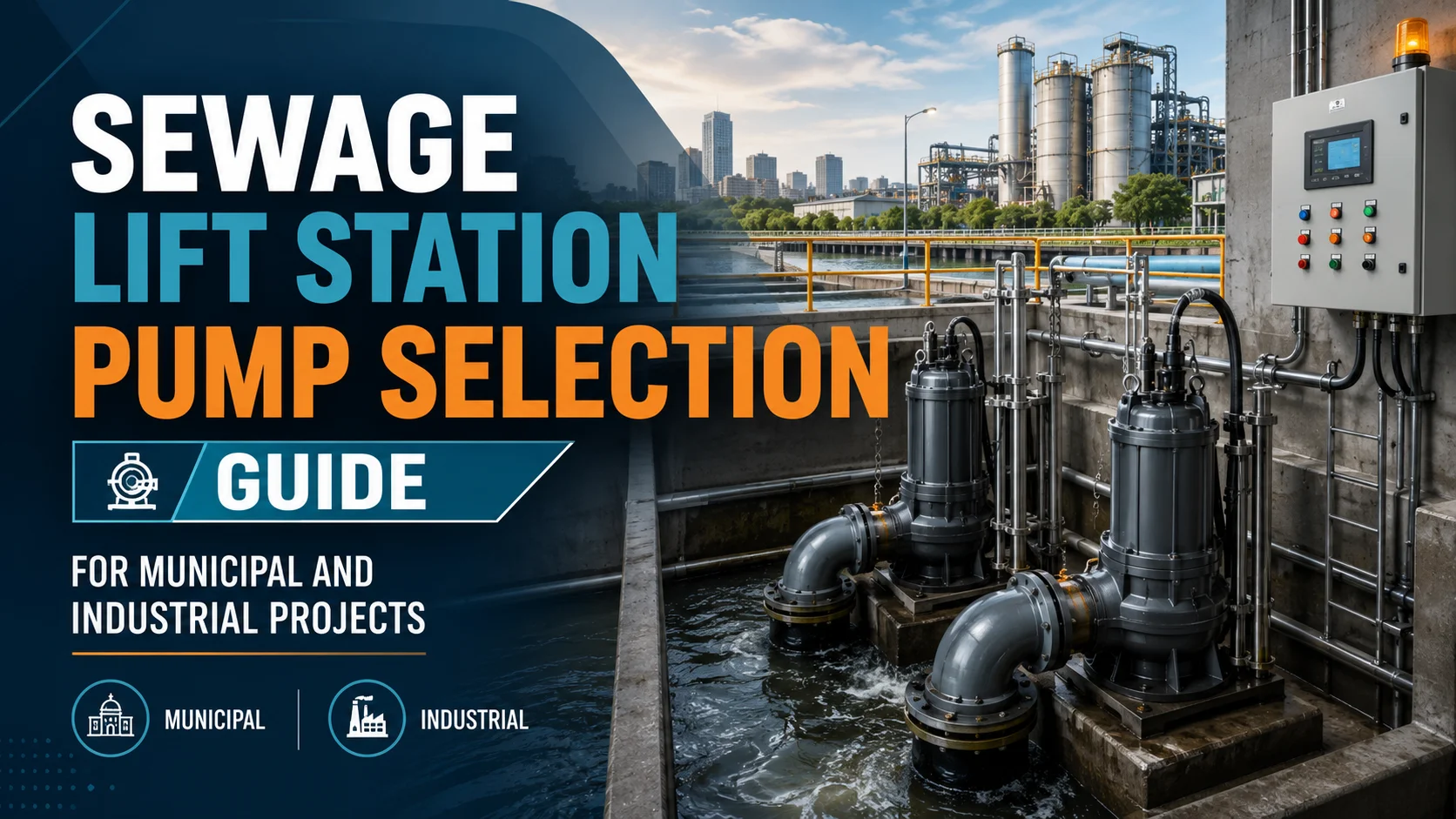
Learn how to select sewage lift station pumps for municipal, STP and industrial wastewater projects. Compare flow, head, solids, wet well, standby and cont
A sewage lift station pump should be selected by matching the pump to inflow, head, wet-well design and solids risk. The buyer should calculate average flow, peak flow, total dynamic head, pipe losses, wet-well operating levels, solids size, clogging risk, duty/standby arrangement and control logic before selecting a pump.
For many lift station and wet-well applications, Flow Chem’s submersible sewage sludge pump route is the primary product page to review. If the lift station receives rags, wipes, plastics or fibrous wastewater, the submersible cutter pump route should also be evaluated.
What is a sewage lift station?
A sewage lift station moves wastewater from a lower level to a higher discharge point when gravity flow is not possible. It is commonly used in municipal networks, STPs, industrial wastewater systems, basement drainage connected to sewage networks and transfer chambers.
A lift station usually includes:
- Wet well or collection chamber.
- One or more submersible pumps.
- Discharge piping.
- Non-return and isolation valves.
- Level controls.
- Control panel.
- Alarm system.
- Lifting/removal arrangement.
The pump is only one part of the system. Selection must consider the full lift station layout.
Step 1: define average and peak inflow
Lift station pumps must handle real sewage inflow, not only estimated average demand. Peak inflow may occur during morning/evening use, industrial discharge cycles, monsoon inflow or upstream pump operation.
Document:
- Average flow.
- Peak flow.
- Minimum flow.
- Emergency inflow condition.
- Source of sewage.
- Whether stormwater enters the system.
- Whether industrial wastewater mixes with sewage.
Peak flow determines whether one pump is enough or whether duty/assist operation is needed.
Step 2: calculate total dynamic head
Total dynamic head includes more than vertical lift. It includes static lift, pipe length, pipe diameter, bends, valves, fittings and discharge condition.
Include:
- Low water level in wet well.
- High discharge point.
- Pipe length.
- Pipe diameter.
- Number of bends.
- Non-return valve loss.
- Isolation valve loss.
- Final discharge pressure or gravity connection.
If head is underestimated, the pump may not transfer sewage at the required rate. Pump curve review is essential.
Step 3: size the wet well correctly
Wet-well design affects pump cycling, odor, solids settlement and maintenance.
Review:
- Wet-well volume.
- Start and stop levels.
- Pump submergence.
- Minimum detention time.
- Maximum detention time.
- Inlet location.
- Dead zones where solids settle.
- Access for cleaning.
- Space for standby pump.
A poorly designed wet well can cause frequent starts, sludge buildup, odors and pump choking.
Step 4: review solids and clogging risk
Sewage lift stations often receive unpredictable solids. This is one of the most important selection factors.
Ask:
- Are rags, wipes or plastics present?
- Is screening available upstream?
- Is fibrous waste common?
- What solids size should the pump handle?
- Has the site faced repeated choking?
- Is grit or abrasive material present?
- Is cutting action required?
For standard sewage and sludge, review the sewage sludge pump route. For repeated ragging or fibrous clogging, review cutter pump selection.
Step 5: choose duty/standby arrangement
Lift stations should be designed for reliability. A single pump can create overflow risk if it fails.
Common arrangements include:
- One duty + one standby pump.
- Duty/assist/standby for high peak flow.
- Alternating operation to balance runtime.
- Emergency bypass or backup pumping where required.
For municipal and industrial sewage lift stations, standby planning should be discussed before procurement.
Step 6: set control logic and alarms
Controls decide when pumps start, stop, alternate and alarm. Poor control logic can create overflow, dry-run risk or excessive starts.
Review:
- Start level.
- Stop level.
- High-level alarm.
- Low-level protection where applicable.
- Pump alternation.
- Duty/assist logic.
- Manual/auto mode.
- Power failure alarm.
- Panel protection.
The control panel and level sensors should be commissioned with the pump.
Step 7: plan valve and piping layout
Lift station piping must allow reliable operation and safe service.
Review:
- Non-return valve location.
- Isolation valve location.
- Valve chamber access.
- Pipe support.
- Air release need where applicable.
- Discharge velocity.
- Solids settling risk.
- Flushing or cleaning access.
Wrong valve placement can cause reverse flow, poor maintenance access or extra head loss.
Step 8: ensure safe maintenance access
Lift station pumps will need inspection, cleaning and service. Access should be planned at design stage.
Plan for:
- Pump lifting arrangement.
- Guide rail/coupling system where required.
- Wet-well access opening.
- Safe isolation before removal.
- Valve chamber access.
- Control-panel access.
- Ventilation and safety procedure.
- Space for maintenance team.
A pump that is hard to remove can turn a small blockage into a major site problem.
Step 9: prepare a complete enquiry brief
Before requesting a lift station pump recommendation, prepare a selection brief.
Include:
- Application type: municipal, STP, industrial, residential-commercial complex or transfer station.
- Average and peak flow.
- Total dynamic head.
- Wet-well dimensions.
- Start/stop levels.
- Pipe length and diameter.
- Solids type and clogging history.
- Screening condition.
- Duty/standby requirement.
- Power supply and control-panel needs.
- Installation and maintenance constraints.
For Flow Chem review, submit the project details through the Flow Chem contact page.
Sewage lift station pump selection checklist
Use this checklist before finalizing the pump:
- Average and peak inflow calculated.
- Total dynamic head calculated.
- Wet-well dimensions reviewed.
- Start and stop levels defined.
- Solids and clogging risk reviewed.
- Pump type selected based on failure mode.
- Duty/standby arrangement planned.
- Valve and piping layout checked.
- Control logic and alarms defined.
- Maintenance access confirmed.
- Pump curve and assumptions reviewed.
Common mistakes to avoid
Avoid these lift station mistakes:
- Selecting only by horsepower.
- Ignoring peak inflow.
- Ignoring pipe friction and valve losses.
- Designing a wet well that causes frequent pump starts.
- Ignoring ragging and fibrous solids.
- Skipping standby pump planning.
- Installing valves where they cannot be serviced.
- Not testing alarms and alternation logic.
- Not planning safe pump removal.
These mistakes increase overflow risk, clogging, downtime and maintenance cost.
Frequently asked questions
What type of pump is used in a sewage lift station?
Submersible sewage or sewage sludge pumps are commonly reviewed for sewage lift stations. If rags, wipes, plastics or fibrous solids cause repeated choking, a cutter pump may be required.
How do you size a sewage lift station pump?
Size the pump by calculating average flow, peak flow, total dynamic head, wet-well operating levels, pipe losses, solids risk and duty/standby requirement. Pump curve review is needed before final selection.
Why is standby pump planning important in lift stations?
A standby pump reduces overflow risk if the duty pump fails or peak inflow exceeds one pump’s capacity. Critical municipal and industrial lift stations should review duty/standby or duty/assist arrangements.
What causes sewage lift station pumps to clog?
Common causes include rags, wipes, plastics, fibrous solids, poor screening, low velocity, wet-well buildup, wrong pump type or poor pump placement.
What control logic is needed for a sewage lift station?
Typical control logic includes start level, stop level, high-level alarm, low-level protection where applicable, pump alternation, duty/assist logic and manual/auto mode.
What information should I send for a lift station pump quote?
Send average and peak flow, total dynamic head, wet-well dimensions, start/stop levels, pipe length, solids profile, clogging history, duty/standby need, power supply and control-panel requirements.
Need help selecting the right pump?
Share your flow, head, liquid type, solids, site layout and duty cycle with Flow Chem Pumps. Our team can help you shortlist the right pump.