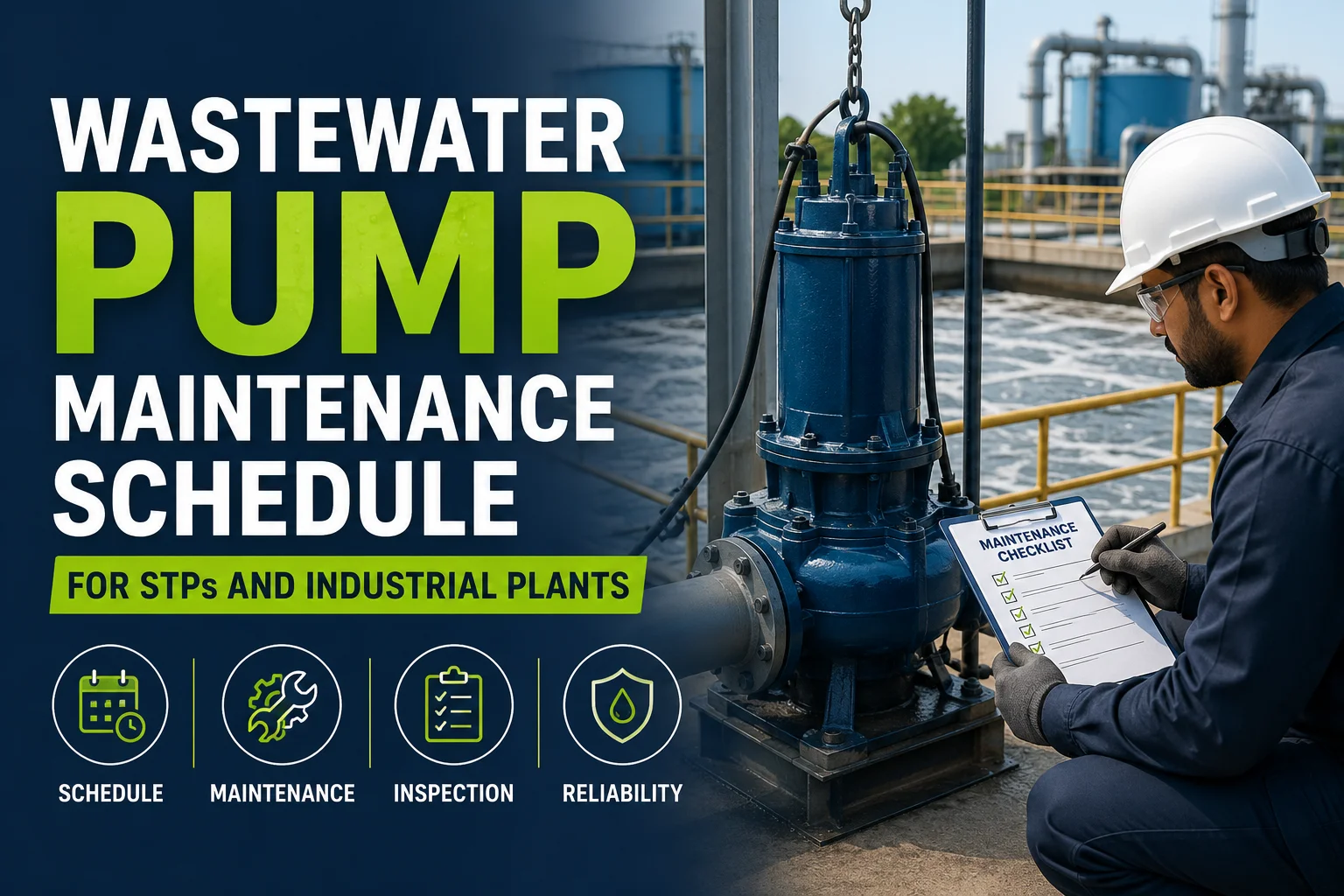
Use this wastewater pump maintenance schedule for STPs, ETPs and industrial plants. Learn daily, weekly, monthly and quarterly pump checks to reduce downti
Wastewater pumps should be checked daily, weekly, monthly and during planned shutdowns. Daily checks focus on whether the pump is running normally. Weekly checks focus on sump condition, switches, valves and visible damage. Monthly checks focus on electrical health, wear indicators and removal access. Quarterly or shutdown checks focus on deeper cleaning, standby testing and system inspection.
For sewage and sludge transfer, Flow Chem’s submersible sewage sludge pump page is the primary product route. For wastewater with rags, wipes, plastics or fibrous solids, the submersible cutter pump route should be reviewed. For treated/semi-treated wastewater, compare the duty with submersible waste water pump and effluent pumps.
Why wastewater pump maintenance matters
Quick answer: Most submersible wastewater pumps in STPs and industrial plants run 8–15 years before replacement. Review the wastewater pump replacement cycle at yearly condition assessments: repeated clogging, falling duty-point performance, rising energy use or frequent seal repairs usually mean the replacement cycle has arrived — not another overhaul. Commercial wastewater pump maintenance (daily, weekly, monthly and quarterly checks) is what stretches that service life.
Wastewater pumps operate in harsh conditions. Sewage, sludge, grit, fibers, oil, process residue and fluctuating inflow can stress the pump and the system around it. A pump may fail because of the motor, but it may also fail because of clogging, wet-well buildup, valve blockage, poor installation, float-switch issues or lack of standby testing.
A maintenance schedule helps reduce:
- Pump choking.
- Motor tripping.
- Seal stress.
- Low discharge.
- Wet-well overflow risk.
- Emergency cleaning.
- Unplanned shutdowns.
- High service cost.
- Safety risks during breakdown work.
Preventive checks are usually easier and cheaper than emergency response.
Daily checks for wastewater pumps
Daily checks should be simple enough for operators to perform consistently.
Check:
- Pump running status.
- Abnormal noise.
- Unusual vibration.
- Discharge flow condition.
- Amperage trend if panel reading is available.
- Frequent start/stop behavior.
- Control-panel alarm indication.
- Wet-well or sump level.
- Signs of clogging or delayed pumping.
- Smell, overflow or unusual site condition.
If flow drops while the motor is running, check for blockage, valve problems, air locking, impeller wear or wrong operating condition.
Weekly checks for wastewater pumps
Weekly checks should focus on early warning signs and site conditions.
Review:
- Sump/wet-well debris buildup.
- Floating material, rags, wipes or plastics.
- Float switch operation.
- Cable routing and visible damage.
- Valve chamber condition.
- Non-return valve behavior.
- Discharge line vibration.
- Guide rail or lifting-chain condition where installed.
- Standby pump readiness.
- Control-panel cleanliness and ventilation.
If fibrous material repeatedly collects around the pump, review whether cutter-pump selection is needed for the application.
Monthly checks for wastewater pumps
Monthly checks should be more detailed and may require a maintenance engineer.
Check:
- Insulation resistance as per site electrical practice.
- Motor current against normal trend.
- Pump lifting/removal access.
- Impeller condition where inspection is possible.
- Signs of casing wear or corrosion.
- Seal leakage indicators where applicable.
- Fasteners and mounting condition.
- Cable gland/cable-entry condition.
- Control-panel contactors and overload settings.
- Pump alternation logic in duty/standby systems.
Monthly checks help catch slow failures before they become emergency breakdowns.
Quarterly or shutdown maintenance checks
Quarterly or planned-shutdown checks should inspect the pump and system together.
Review:
- Pump cleaning and external inspection.
- Impeller, volute and suction area.
- Wear areas.
- Seal condition as per manufacturer guidance.
- Non-return valve and isolation valve function.
- Pipework support and leakage.
- Wet-well cleaning requirement.
- Standby pump trial run.
- Control-panel protection devices.
- Lifting arrangement and safety condition.
For critical STP, municipal or industrial plant duties, planned shutdown maintenance should be documented.
Maintenance signs that need immediate attention
Do not wait for the next scheduled check if these symptoms appear:
- Pump runs but no discharge.
- Repeated tripping.
- Sudden increase in current.
- Abnormal noise or vibration.
- Frequent choking.
- Wet-well level not reducing.
- Burning smell or electrical alarm.
- Cable damage.
- Leakage in discharge line.
- Standby pump not starting.
These symptoms can indicate blockage, motor overload, impeller damage, electrical issues, valve failure or unsuitable pump selection.
Cutter pump maintenance considerations
Cutter pumps are useful when fibrous waste causes choking, but they still need inspection.
For cutter-pump duties, review:
- Cutter mechanism condition.
- Fibrous buildup near suction.
- Solids entering the wet well.
- Pump current trend.
- Cutting performance changes.
- Frequent clogging history.
- Installation clearance and access.
If the wastewater profile has changed, pump selection may need review. A cutter pump is not a substitute for proper screening and maintenance.
Effluent and treated wastewater pump maintenance
Effluent and treated wastewater pumps may face fewer heavy solids than raw sewage pumps, but maintenance is still required.
Check:
- Flow consistency.
- Valve condition.
- Strainers or screens where used.
- Corrosion signs.
- Motor current.
- Sump cleanliness.
- Float/level switch operation.
- Pipe leakage.
For treated water or semi-treated effluent duties, compare the application with effluent pumps and the relevant wastewater pump route.
Recordkeeping for wastewater pump maintenance
Maintenance is more useful when trends are recorded. A simple log can help identify recurring issues.
Track:
- Date and time of inspection.
- Pump running hours if available.
- Current reading.
- Sump level observation.
- Alarm history.
- Cleaning performed.
- Blockage found.
- Parts replaced.
- Standby pump test result.
- Corrective action taken.
Recurring failures often reveal selection, installation or process problems.
When maintenance reveals a pump selection problem
If the same issue repeats, maintenance alone may not solve it. The pump or system may be mismatched.
Review selection if:
- Clogging is frequent despite cleaning.
- Flow remains low after inspection.
- Motor current is consistently high.
- Pump is operating far from the required duty point.
- Grit or abrasive solids cause repeated wear.
- Industrial wastewater chemistry has changed.
- Standby pumps also fail under the same conditions.
For application review, share duty details through the Flow Chem contact page.
Wastewater pump maintenance checklist
Use this checklist for STPs, ETPs and industrial plants:
- Daily running status checked.
- Abnormal noise/vibration checked.
- Discharge flow observed.
- Wet-well level reviewed.
- Weekly sump debris inspection completed.
- Float/level switches tested.
- Valve chamber checked.
- Standby pump tested.
- Monthly electrical readings reviewed.
- Quarterly cleaning and pump inspection planned.
- Maintenance log updated.
- Repeated failures escalated for selection review.
Common maintenance mistakes to avoid
Avoid these mistakes:
- Waiting until the pump fails.
- Ignoring increasing current trend.
- Ignoring repeated clogging.
- Not testing standby pumps.
- Not checking float switches.
- Cleaning the pump but ignoring the wet well.
- Replacing parts without reviewing root cause.
- Ignoring industrial wastewater chemistry.
- Not keeping a maintenance log.
These mistakes turn small issues into breakdowns.
Wastewater pump service life and replacement cycle
In a wastewater treatment plant, the pump replacement cycle is driven less by calendar age than by condition: efficiency loss, repeated clogging, seal failures and rising repair frequency all signal that the wastewater pump replacement cycle has arrived. Typical service-life ranges below assume a disciplined maintenance schedule and normal municipal or industrial wastewater duty.
| Pump class | Typical service life | Replace or review when |
|---|---|---|
| Submersible sewage / wastewater pumps (continuous STP duty) | 8–15 years | Yearly condition review from year 8; repeated trips, falling duty-point flow, seal or winding faults |
| Cutter and grinder pumps (rags, wipes, fibrous solids) | 5–10 years | Cutter wear, frequent unplugging, vibration; inspect cutters at quarterly maintenance |
| Effluent and treated-wastewater pumps | 10–15 years | Performance drift at monthly checks; corrosion of wetted parts |
| Seals, wear rings, bearings (all classes) | 2–5 years | Replaced on condition at quarterly or shutdown maintenance |
When the replacement cycle ends, shortlist the best sewage pumps for commercial and industrial use and review pump energy efficiency before reordering the same model — an oversized or worn impeller is often the real reason a pump reached end of life early.
Frequently asked questions
How often should wastewater pumps be maintained?
Wastewater pumps should be checked daily for running condition, weekly for sump and switch issues, monthly for electrical and wear indicators, and quarterly or during shutdowns for deeper cleaning and inspection. Critical sites may need more frequent checks.
What is checked during sewage pump maintenance?
Common checks include pump noise, vibration, current, discharge flow, sump level, clogging signs, float switches, valves, cable condition, impeller area, seal indicators, control panel and standby pump operation.
Why does a wastewater pump keep clogging?
Repeated clogging may be caused by rags, wipes, plastics, fibrous waste, poor screening, wrong pump type, unsuitable impeller design, low flow velocity or wet-well buildup. Cutter-pump review may be needed for fibrous sewage.
Should standby wastewater pumps be tested?
Yes. Standby pumps should be tested regularly. A standby pump that is not tested may fail during the exact moment it is needed for peak flow, maintenance or emergency operation.
When should a wastewater pump be replaced instead of repaired?
Replacement should be reviewed when the pump repeatedly fails, cannot meet duty point, has major wear or corrosion, trips frequently, or is not suitable for the actual wastewater solids and operating conditions.
What information should I share for wastewater pump service review?
Share pump application, flow/head requirement, wastewater type, solids profile, clogging history, operating hours, current readings, alarms, installation details, photos if available and previous maintenance history.
What is the wastewater pump replacement cycle?
The wastewater treatment pump replacement cycle is typically 8–15 years for submersible sewage pumps, 5–10 years for cutter pumps and 10–15 years for effluent pumps, assuming scheduled maintenance. Review the cycle yearly from year 8: repeated clogging, falling flow at the duty point, rising energy use or frequent seal repairs mean replace — see heavy-duty submersible wastewater pump options — rather than another overhaul.
How long do wastewater treatment pumps last?
With a daily-to-quarterly maintenance schedule, submersible wastewater pumps last 8–15 years, cutter and grinder pumps 5–10 years and effluent or treated-water pumps 10–15 years. Seals, wear rings and bearings are replaced on condition every 2–5 years inside that service life.
What does commercial wastewater pump maintenance include?
Commercial wastewater pump maintenance pairs the daily, weekly, monthly and quarterly checks in this schedule with recordkeeping and spare-part planning: running-condition checks and sump cleanliness daily, float-switch and alarm tests weekly, insulation and wear checks monthly, and teardown with seal and impeller inspection during quarterly or shutdown maintenance.
Need help selecting the right pump?
Share your flow, head, liquid type, solids, site layout and duty cycle with Flow Chem Pumps. Our team can help you shortlist the right pump.