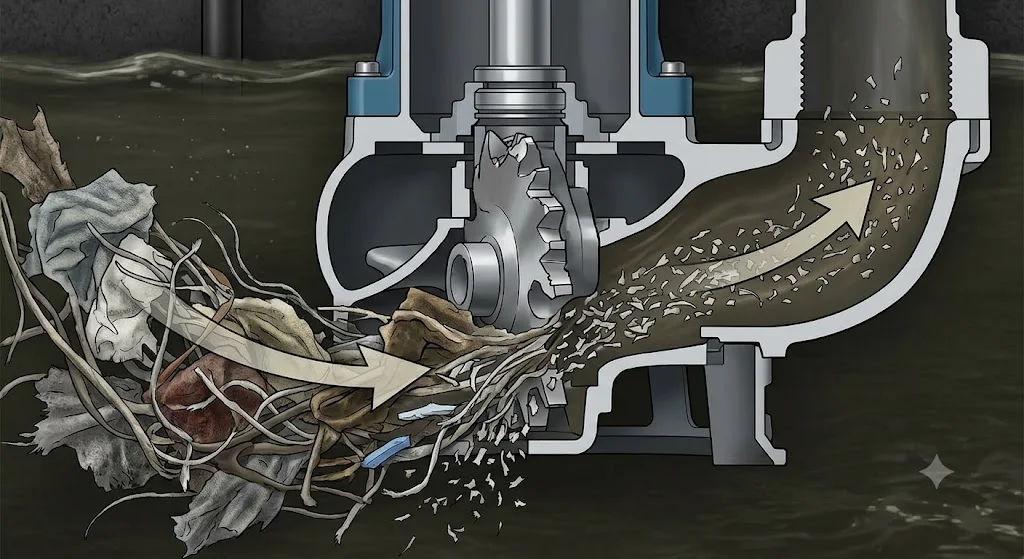
Learn when cutter pumps are needed for high-solids wastewater, sewage, STP and industrial sump duties. Compare cutter pumps with sewage, sludge and dewatering pumps.
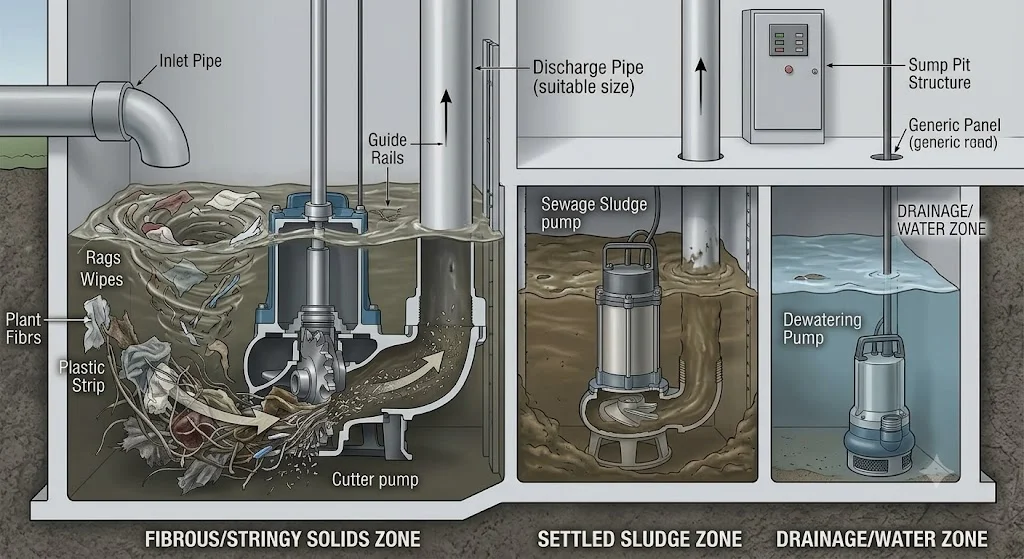
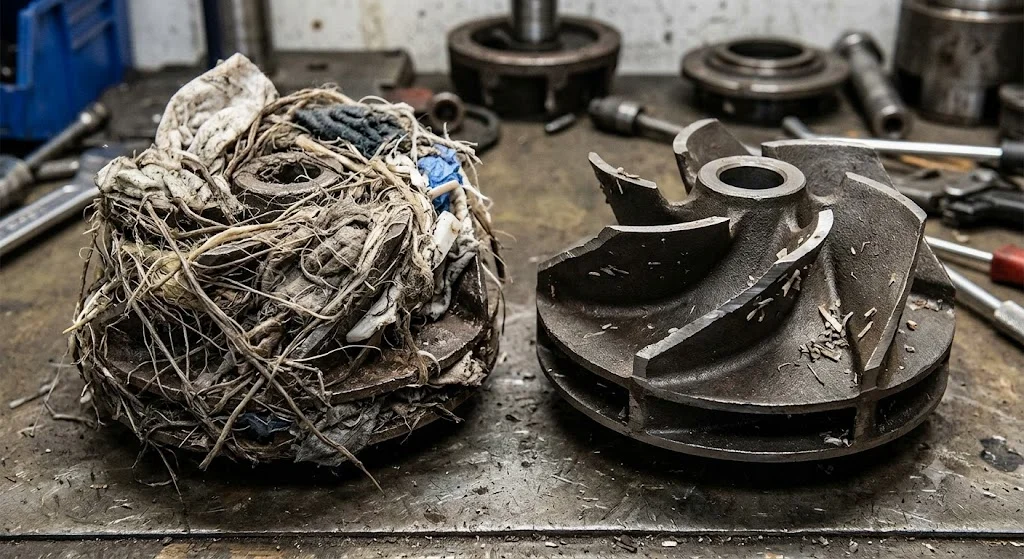
You need a submersible cutter pump when the wastewater problem is not only dirty water, but repeated clogging from fibrous or stringy solids. In sewage, STP and industrial wastewater systems, rags, wipes, cloth pieces, packaging strips, hair-like material, plastic fragments and process fibers can wrap around normal pump components. Once that happens, the pump may lose flow, trip on overload, require frequent lifting or stop the line completely.
A cutter pump helps reduce this risk by cutting or reducing fibrous material before it can block the pump path. It is most useful where the site already has a clogging history or where the wastewater source is known to carry ragging-prone solids.
A cutter pump is not automatically required for every sewage or wastewater application. If the site is mainly moving sludge, settled solids or thick wastewater, a submersible sewage sludge pump may be the better first shortlist. If the site is mainly removing storm water, seepage water or construction water, a dewatering pump or submersible drainage pump may be more suitable. The right decision starts with the actual solids profile, not the general word “wastewater”.
Why high-solids wastewater causes pump failure
High-solids wastewater is difficult because the liquid is not consistent. During one operating cycle, the pump may handle mostly water. During the next cycle, it may face sewage, grit, cloth-like material, organic solids or floating debris. This variation creates a higher risk of clogging, wear, low flow, motor overload and emergency maintenance.
In many STP, municipal and industrial sites, the pump is blamed when the actual issue is a mismatch between pump design and solids behavior. A normal drainage pump may handle dirty water but fail when long fibers enter the sump. A sewage pump may pass soft solids but still suffer if rags wrap around the impeller. A sludge pump may move heavier wastewater but may not solve repeated ragging if the main problem is fibrous material.
This is where cutter pump selection becomes important. The buyer should ask: what is stopping the existing pump from working? If the answer is repeated ragging, wrapping or blockage from fibrous material, a cutter pump deserves serious evaluation.
What is a cutter pump?
A cutter pump is a wastewater pump designed to reduce clogging from fibrous solids. In a submersible cutter pump, the pump is installed directly in the sump or pit, and the cutting arrangement helps break down or reduce incoming material before it can cause blockage.
For Flow Chem’s SEO architecture, this article supports the main submersible cutter pump product page. The product page should remain the commercial ranking destination for the keyword `cutter pump`, while this article explains selection, applications and decision factors for buyers researching high-solids wastewater duties.
Typical cutter pump applications include:
- Sewage lift stations with repeated ragging complaints.
- STP inlet or transfer sumps where rags and wipes enter the line.
- Municipal wastewater pumping stations.
- Commercial buildings with mixed sewage and sanitary waste.
- Industrial wastewater pits that receive fibers, packaging material or process residue.
- Food, textile, packaging or processing facilities where stringy solids may enter wastewater.
- Retrofit duties where a normal sewage pump is frequently removed for cleaning.
The important point is that a cutter pump is selected because the solids are fibrous, stringy or clogging-prone. It is not selected only because the wastewater is dirty.
Cutter pump vs sewage pump vs sludge pump
Buyers often compare cutter pumps with sewage and sludge pumps. These pumps can overlap in wastewater environments, but they solve different problems.
| Pump type | Best suited for | Main selection reason | Typical Flow Chem support page | |---|---|---|---| | Cutter pump | Fibrous, stringy, ragging-prone wastewater | Reduce clogging caused by rags, wipes, cloth, plastic or fibers | `/submersible-cutter-pump/` | | Sewage pump | Sewage water, STP transfer, municipal wastewater | Move sewage with appropriate solids handling | `/submersible-sewage-sludge-pump/` | | Sludge pump | Settled sludge, thicker wastewater, solids-laden liquid | Move heavier sludge-like wastewater with suitable duty design | `/submersible-sewage-sludge-pump/` | | Drainage/dewatering pump | Construction water, seepage water, rainwater, pits | Remove water from sites where solids are manageable | `/dewatering-pumps/` and `/submersible-drainage-pump/` |
A cutter pump is usually the right direction when a site has ragging. A sewage or sludge pump is usually the right direction when the challenge is solids handling, thickness or wastewater transfer without major fibrous wrapping. A dewatering or drainage pump is usually the right direction when the duty is water removal rather than sewage solids handling.
Signs your wastewater duty may need a cutter pump
A buyer should shortlist a cutter pump when the site shows one or more of these signs.
1. The pump is frequently pulled out for cleaning
If the maintenance team repeatedly removes the pump to clean wrapped material, the issue may be ragging rather than simple sizing. Look for cloth strips, wipes, hair-like material, plastic, packaging film or fibrous waste around the impeller or inlet area.
A larger motor alone may not fix this. If the solids are wrapping, the problem is mechanical blockage. A cutter pump can reduce downtime by addressing the material before it builds into a blockage.
2. The pump trips due to overload after clogging
Motor overload can happen when the pump is forced to work against a blockage or when material wraps around rotating components. If overload trips happen along with visible ragging, the application should be reviewed for cutter pump suitability.
The selection should still include electrical and hydraulic checks. Flow, head, cable length, panel setting, voltage condition and duty cycle all matter. But if the root cause is fibrous clogging, the pump type needs attention.
3. The sump receives mixed sewage or unpredictable solids
Municipal and commercial sewage streams are rarely clean. In real sites, operators may find wipes, sanitary waste, rags, thin plastics, food residue and other foreign material. If these materials enter the pump sump, a standard pump may face repeated clogging.
A cutter pump is especially relevant where screening is weak, upstream control is limited or the solids profile changes during peak hours.
4. Existing sewage pumps lose flow even when the motor is running
A pump can appear to run but deliver poor flow if the inlet or impeller is partially blocked. If this happens repeatedly, the issue may not be pump capacity. It may be clogging inside the pump path.
Before replacing the pump, inspect what material is blocking it. If the material is fibrous, compare the application with Flow Chem’s submersible cutter pump. If the material is sludge-heavy, review the submersible sewage sludge pump route instead.
5. The site has limited tolerance for manual cleaning
Some sites cannot afford repeated pump lifting and cleaning. STPs, municipal stations, basements, commercial buildings and industrial plants may need more reliable operation because downtime affects compliance, flooding risk or production continuity.
Where manual cleaning is expensive or unsafe, cutter pump selection can be justified even if the upfront selection is more specialized than a basic wastewater pump.
Step-by-step cutter pump selection framework
Step 1: identify the solids type
Start with the solids, not horsepower. Ask the site team to describe or photograph the material found during cleaning. The most important distinction is between fibrous material and heavy sludge.
Cutter pump suitability increases when the solids are:
- Long or stringy.
- Cloth-like or wipe-like.
- Flexible enough to wrap around a normal impeller.
- Plastic or packaging-film type material.
- Food or process fiber.
- Mixed sewage debris that repeatedly causes ragging.
Cutter pump suitability is less certain when the main challenge is:
- Thick settled sludge.
- High abrasive grit.
- Large hard objects.
- Chemical compatibility.
- Clean-water dewatering.
- Borewell or domestic water supply duties.
No borewell, deep-well or domestic water angle should be used for this article. The target is industrial, municipal and commercial wastewater only.
Step 2: calculate flow and head
A cutter mechanism does not replace correct hydraulic sizing. The pump must still meet the duty point.
Document:
- Required flow rate.
- Static lift from sump to discharge point.
- Pipe diameter and pipe length.
- Number of bends, valves and fittings.
- Discharge pressure or downstream line condition.
- Minimum and maximum water levels in the sump.
- Duty cycle and expected running hours.
- Whether duty/standby operation is needed.
If the pump is undersized, it may fail even if it has a cutter. If it is oversized, it may cycle poorly, create unnecessary energy use or operate away from the intended range. Correct selection should balance clog resistance with flow and head requirements.
Step 3: review installation conditions
Most high-solids wastewater issues are affected by sump design and installation quality. A good pump installed in a poor sump can still face recurring problems.
Check:
- Whether solids settle away from the pump intake.
- Whether floating material accumulates near the pump.
- Whether the sump has dead zones.
- Whether guide rail or lifting arrangement is available.
- Whether the pump can be accessed safely for inspection.
- Whether upstream screening exists.
- Whether discharge pipe size is suitable for wastewater solids.
For STP, municipal and industrial sites, service access is a major selection factor. A pump that is difficult to lift or inspect can increase downtime even when the pump itself is appropriate.
Step 4: match motor and electrical protection
High-solids wastewater can create uneven load on the motor. The electrical system must be matched to the pump duty.
Review:
- Motor rating and phase requirement.
- Voltage supply stability.
- Starter and control panel arrangement.
- Overload settings.
- Cable length and cable protection.
- Dry-run or level control requirements.
- Whether the pump needs automatic operation.
This is where cutter pump selection overlaps with the June `sewage motor` keyword plan. Flow Chem should also build a separate support article around sewage motor selection for HP, phase, head and solids-handling factors. That article will reinforce the submersible sewage sludge pump page, while this cutter article reinforces the submersible cutter pump page.
Step 5: check material compatibility and wear risk
Wastewater may contain chemicals, grit, abrasive particles, corrosive liquid or oily residues. Cutter pump selection should consider the complete liquid profile, not only the presence of rags.
Ask:
- Is the wastewater municipal, commercial or industrial?
- Are chemicals or process liquids present?
- Is the liquid abrasive?
- Is the temperature within pump suitability?
- Are solids soft, fibrous, gritty or mixed?
- Is corrosion resistance required?
If the wastewater is chemically aggressive or abrasive, the buyer should confirm material suitability before final selection. Avoid claiming universal compatibility without project data.
Step 6: decide whether cutting action is actually needed
The final selection question is simple: what will fail if we do not use a cutter pump?
If the answer is repeated ragging and clogging, a cutter pump is likely justified. If the answer is only water removal, choose dewatering or drainage. If the answer is thick sludge movement, review sewage sludge pump suitability. If the answer is abrasive slurry, confirm the correct slurry or sludge-handling product route before publishing claims.
Application examples
STP inlet and transfer sumps
STP inlet areas can receive unpredictable sewage solids. If rags, wipes and fibrous material reach the sump, a cutter pump may reduce maintenance calls. The selection must still consider flow, head, duty cycle and screen condition.
Recommended internal path: link this article to the submersible cutter pump page using anchors such as “submersible cutter pump for sewage” and “cutter pump for STP wastewater”. Also link related sewage-selection content back to the submersible sewage sludge pump page.
Municipal sewage pumping stations
Municipal pumping stations often experience ragging because the inflow is difficult to control. In such sites, the maintenance history is critical. If clogging happens frequently and the obstruction is fibrous, a cutter pump should be reviewed.
The buyer should also assess whether upstream screening, sump design or pipe layout is contributing to the problem. Pump replacement alone may not solve every station issue.
Commercial buildings and basements
Commercial buildings may face mixed sanitary waste, food waste or cleaning material in wastewater lines. If the sump receives fibrous material, a cutter pump may help prevent repeated blockage. For mostly stormwater or seepage water, use a dewatering pump or submersible drainage pump instead.
Industrial wastewater pits
Industrial wastewater needs more caution because the liquid depends on the process. Textile, food processing, packaging and similar operations may generate fibrous or stringy waste. Other industrial sites may generate effluent, sludge, grit or chemical wastewater.
If the water is treated or semi-treated with low solids, review effluent pumps or submersible waste water pumps. If the liquid includes fibrous clogging material, cutter pump selection becomes more relevant.
Retrofit after repeated pump failures
A cutter pump is often considered after a standard pump has failed repeatedly. In a retrofit, do not only match the old pump HP. Recheck the duty point, discharge line, solids profile, control panel and maintenance history. The replacement should solve the actual failure mode.
Common mistakes when selecting cutter pumps
Mistake 1: selecting only by horsepower
HP does not explain solids behavior. A higher-HP pump can still clog if fibrous material wraps around it. Select by solids profile, flow, head and installation conditions.
Mistake 2: using cutter pumps for every wastewater duty
Cutter pumps are specialized. They are valuable where cutting action solves clogging. For drainage, dewatering or clean dirty-water duties, a cutter pump may not be necessary.
Mistake 3: ignoring pipe size and discharge layout
Even when the pump can handle solids, the discharge line must support the application. Undersized pipes, sharp bends or unsuitable valves can create restrictions and maintenance problems.
Mistake 4: ignoring upstream screening
A cutter pump can help with ragging, but upstream screening and sump management still matter. Very large hard objects, excessive grit or non-pumpable debris should not be treated as a pump-selection problem only.
Mistake 5: publishing price or capacity claims without confirmation
For SEO and sales accuracy, avoid unsupported price, model, capacity or stock claims. Flow Chem should use this article to attract the right buyer and route them to a technical consultation, not to publish unverified specifications.
Buyer checklist before requesting a cutter pump quote
Before requesting a quote, collect:
1. Application type: STP, municipal, commercial or industrial wastewater. 2. Liquid description: sewage, sludge, effluent, drainage water or mixed wastewater. 3. Solids description: fibrous, soft, hard, abrasive, stringy or settled. 4. Existing pump issue: clogging, low flow, overload, wear or wrong selection. 5. Required flow rate. 6. Required total head. 7. Sump depth and installation method. 8. Pipe size and discharge distance. 9. Motor phase and power availability. 10. Operating hours per day. 11. Maintenance access and lifting arrangement. 12. Any chemical, temperature or corrosion concerns.
With this information, the selection can be based on real site duty instead of guesswork.
How this article should support Flow Chem rankings
The goal is not for this article to replace the commercial product page. The goal is to build supporting relevance for the submersible cutter pump money page.
Recommended internal linking actions after publishing:
- Link from this article to `/submersible-cutter-pump/` at least 4 times with natural anchors such as “submersible cutter pump”, “cutter pump for sewage”, “cutter pump for high-solids wastewater” and “wastewater cutter pump”.
- Link once to `/submersible-sewage-sludge-pump/` for sewage/sludge comparison context.
- Link once to `/dewatering-pumps/` and `/submersible-drainage-pump/` to clarify when cutter pumps are not required.
- Add a reciprocal link from the `/submersible-cutter-pump/` page to this article under a “Selection guide” or “When to use cutter pumps” section.
- Add contextual links from the existing cutter-vs-sewage article to this article.
- Use root-level slug only: `/cutter-pumps-high-solids-wastewater`.
For June 2026, this article helps the `cutter pump` cluster by giving Google a clear support asset around high-solids wastewater intent while concentrating commercial signals back to the product page.
Frequently asked questions
What is a cutter pump used for?
A cutter pump is used for wastewater duties where fibrous or stringy solids can clog a normal pump. Common applications include sewage sumps, STP inlet areas, municipal pumping stations, commercial wastewater and industrial pits where rags, wipes, cloth, plastic or process fibers may enter the wastewater stream.
When should I choose a cutter pump instead of a sewage pump?
Choose a cutter pump when repeated clogging is caused by fibrous or ragging-prone material. Choose a sewage pump or sewage sludge pump when the main requirement is moving sewage, sludge or solids-laden wastewater without a specific fibrous clogging problem.
Is a cutter pump suitable for high-solids wastewater?
A cutter pump can be suitable for high-solids wastewater when the solids are fibrous, stringy or likely to wrap around a standard pump. If the wastewater is mainly thick sludge, abrasive slurry or clean drainage water, another pump type may be more appropriate.
Can a cutter pump replace a dewatering pump?
Not usually. A dewatering pump is used to remove water from construction sites, pits, basements or drainage areas where the main duty is water removal. A cutter pump is selected for wastewater with fibrous clogging risk. The correct pump depends on the liquid and solids profile.
What information is needed to select a cutter pump?
To select a cutter pump, provide the application, solids type, flow rate, total head, sump depth, pipe size, motor phase, operating hours, maintenance access and any chemical or abrasive conditions. This helps match the pump to the actual duty.
Need help selecting the right pump?
Share your flow, head, liquid type, solids, site layout and duty cycle with Flow Chem Pumps. Our team can help you shortlist the right pump.