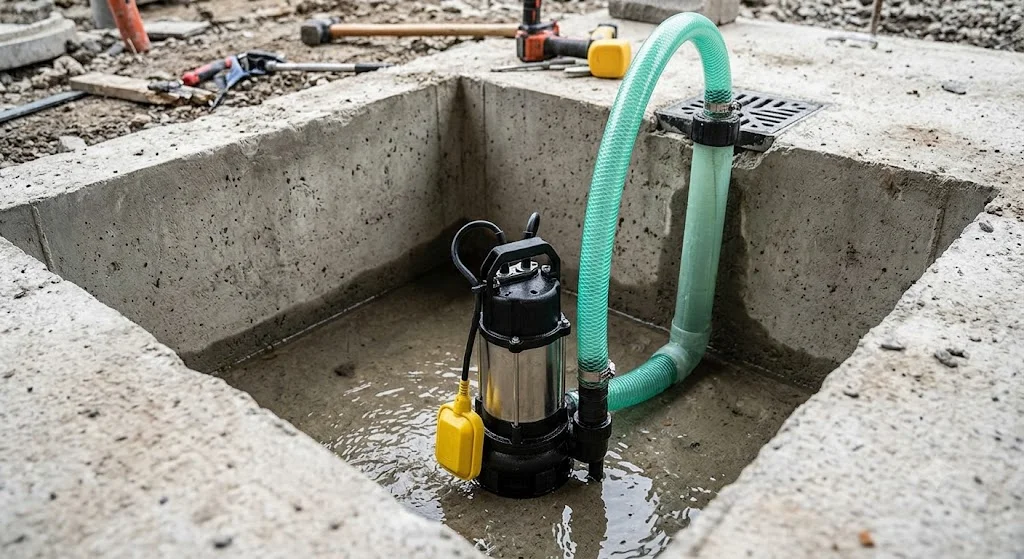
Compare 1 HP dewatering pumps with higher HP pumps for construction, STP, municipal and industrial drainage duties. Learn how to select by flow, head and solids.
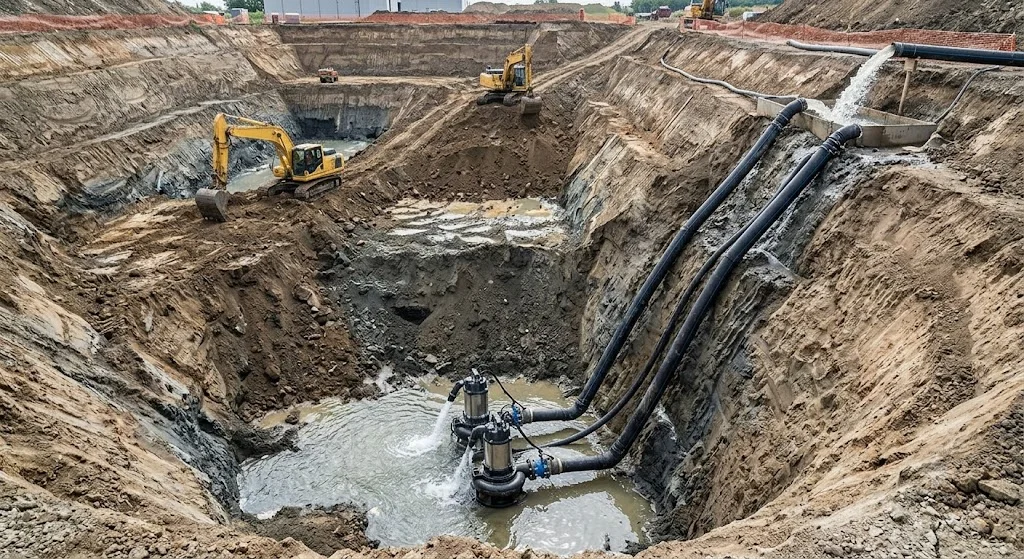
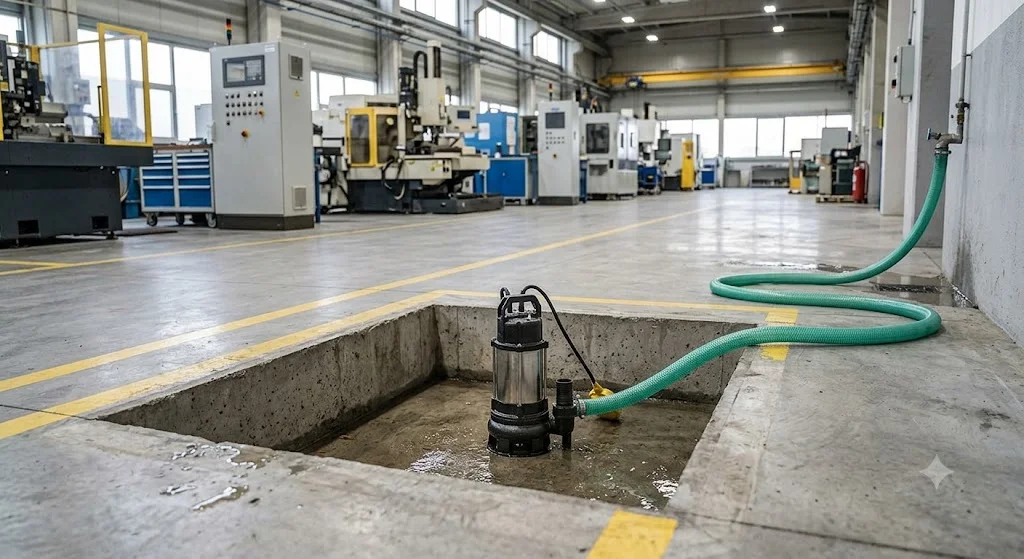
A 1 HP dewatering pump can be enough for small sumps, localized site drainage, low-to-moderate head duties, temporary water removal and smaller industrial drainage pits when the pump curve matches the required flow and head. It is not automatically enough for large construction excavations, deep pits, long discharge lines, heavy silt, continuous inflow, mining areas or municipal flood-prone drainage.
For Flow Chem buyers, the first step is to compare the duty with the dewatering pump and submersible drainage pump product categories. If the water contains sewage, sludge or high-solids wastewater, review submersible sewage sludge pumps instead of forcing a dewatering pump into the wrong duty.
The correct selection question is not “Should I buy 1 HP?” The correct question is “What HP and pump curve will remove my expected water volume at the actual total head while handling my site conditions?”
Why HP alone is not enough
Horsepower tells you the motor rating, not the complete pumping result. A 1 HP pump from one design can behave differently from another 1 HP pump because the hydraulic design, impeller, efficiency, construction and curve are different. A higher HP pump can also underperform if the pipe size, head calculation or pump type is wrong.
In dewatering, the actual duty is created by the site. The pump must deal with water volume, inflow rate, vertical lift, discharge distance, hose friction, silt, sand, sump depth, operating hours and available power. If any of these inputs are ignored, the selected pump may run but fail to control the water level.
Wrong HP selection can cause:
- Slow dewatering and project delays.
- Pump running continuously without reducing water level.
- Motor overload or frequent tripping.
- High wear in sandy or silty water.
- Poor performance through long hoses.
- Increased maintenance cost.
- Emergency replacement during monsoon or peak inflow.
A 1 HP dewatering pump is a useful option for the right duty, but it should be validated against the pump curve and site data before procurement.
What is a 1 HP dewatering pump?
A 1 HP dewatering pump is a water-removal pump powered by a motor rated around one horsepower. In practical buyer language, it is often considered for small-to-medium drainage and dewatering tasks where water must be removed from a sump, pit, trench, basement, industrial floor area, STP drain area or site collection point.
The term may refer to:
- Submersible dewatering pump.
- Submersible drainage pump.
- Dirty water pump.
- Construction dewatering pump.
- Industrial drainage pump.
- Temporary site water-removal pump.
Because these terms overlap in the market, the buyer should confirm the actual application and liquid condition before selecting the pump.
Step 1: define the dewatering application
Start by identifying where the pump will work. A pump suitable for a small sump may not be suitable for a deep excavation or long discharge line.
Common 1 HP dewatering applications include:
- Small construction sump drainage.
- Basement or foundation pit water removal.
- Temporary trench dewatering.
- Industrial floor pit or utility sump drainage.
- STP non-sewage drainage areas.
- Light municipal drainage support.
- Rainwater collection sump pumping.
Applications that may need higher HP or a different configuration include:
- Deep excavation dewatering.
- Large construction sites with continuous seepage.
- Municipal flood-control drainage.
- Mining or quarry dewatering.
- Long discharge lines with high friction losses.
- Heavy silt or abrasive water.
- Critical drainage where downtime is not acceptable.
The application decides whether 1 HP is even a realistic starting point.
Step 2: calculate total dynamic head
Total dynamic head is the full resistance the pump must overcome. It includes vertical lift, pipe friction, hose length, bends, fittings, valves and discharge conditions. Many 1 HP pump selection mistakes happen because buyers only look at vertical lift and ignore friction losses.
Check:
- Vertical lift from water level to discharge point.
- Horizontal hose or pipe distance.
- Pipe or hose diameter.
- Number of bends and fittings.
- Discharge elevation or pressure.
- Whether water level changes as the sump empties.
- Temporary hose layout at the site.
A 1 HP pump may work well at low head but deliver much less water at higher head. If the discharge line is long or narrow, a higher HP pump or better pipe sizing may be required.
Step 3: estimate flow and inflow rate
Flow rate decides how quickly the pump can remove water. Inflow rate decides whether the pump can stay ahead of incoming water.
Document:
- Approximate water volume in the sump or pit.
- Normal inflow rate.
- Peak inflow during rain, monsoon or process discharge.
- Required emptying time.
- Whether water continues entering during pumping.
- Whether one pump is enough or standby/multiple pumps are needed.
If the pump empties a sump slowly but there is little ongoing inflow, a 1 HP pump may be acceptable. If inflow is continuous and the water level keeps rising, the pump is undersized for the duty even if it is running continuously.
Step 4: check solids, sand and silt
Dewatering water is not always clean. Construction sites, municipal drains and industrial pits can contain sand, silt, grit, leaves, sludge-like material or debris. These conditions affect pump selection and maintenance.
Check:
- Is the water clean, sandy, silty or dirty?
- Is there grit or abrasive material?
- Are solids small, large or fibrous?
- Is there risk of clogging at the inlet?
- Is a strainer, screen or sump design needed?
- Will the pump sit directly in dirty water?
For dirty drainage water, compare Flow Chem’s submersible drainage pump along with the dewatering range. If the application includes sewage or sludge, shift the evaluation to submersible sewage sludge pumps.
Step 5: decide duty cycle and operating hours
A small pump used for occasional drainage is different from a pump expected to run for long periods. Duty cycle can change the correct selection.
Ask:
- Will the pump run occasionally or continuously?
- How many hours per day will it operate?
- Is the site critical if the pump fails?
- Is standby capacity required?
- Is automatic level control needed?
- Will the pump be moved frequently?
For critical construction, municipal or industrial drainage, a duty/standby arrangement may be better than relying on one smaller pump. If the pump must run continuously at a demanding duty point, confirm that the selected model is rated for that operating condition.
1 HP dewatering pump vs higher HP pump
The table below gives a practical comparison. It is not a replacement for pump-curve selection, but it helps buyers understand the decision.
| Selection factor | 1 HP dewatering pump may fit | Higher HP or multiple pumps may be needed | |---|---|---| | Site size | Small sump, localized drainage | Large excavation, municipal drain, mine pit | | Head | Low-to-moderate head | High vertical lift or long hose run | | Flow need | Moderate emptying time acceptable | Fast water removal required | | Inflow | Limited or intermittent inflow | Continuous seepage or storm inflow | | Water condition | Clean/light dirty water | Heavy silt, sand, abrasive water or debris | | Duty cycle | Occasional or moderate duty | Long-running or continuous duty | | Risk level | Non-critical, easy access | Critical site, overflow or downtime risk |
If the duty falls mostly in the right column, the buyer should not force a 1 HP pump selection. A higher HP pump, different hydraulic design, better pipe sizing or multiple pump setup may be required.
When a 1 HP dewatering pump is usually practical
A 1 HP dewatering pump is usually practical when:
- The sump or pit is small to moderate.
- The vertical lift is not high.
- The discharge pipe/hose run is short.
- The water is clean or lightly dirty.
- Inflow is not continuous or extreme.
- The site can tolerate moderate emptying time.
- The pump is used intermittently.
- Service access is easy.
Examples include small construction pits, temporary rainwater removal, localized industrial drainage and smaller STP utility drainage areas.
When higher HP should be considered
Higher HP or a more robust pump configuration should be considered when:
- The excavation is deep.
- The discharge line is long.
- The site needs fast dewatering.
- There is continuous seepage or monsoon inflow.
- Water contains silt, sand or abrasive particles.
- The pump runs for long hours.
- The site is critical and cannot tolerate downtime.
- One pump cannot control the water level.
Higher HP should still be selected from the pump curve. The answer may be a larger pump, multiple pumps, a different pump type or a better piping layout.
1 HP dewatering pump for construction sites
On construction sites, 1 HP pumps may support localized water removal from trenches, pits, basement areas or small sumps. They are useful when portability, quick deployment and moderate duty are more important than large-volume pumping.
However, larger construction sites often face changing conditions. Rain, groundwater seepage, longer hoses and silt can quickly push the duty beyond a small pump’s practical range. For excavation and foundation work, calculate peak inflow and head before selecting the pump.
For construction and site water-removal applications, review Flow Chem’s dewatering pumps and submersible drainage pumps before final selection.
1 HP dewatering pump for industrial sites
Industrial sites may use dewatering or drainage pumps for utility sumps, process-area drainage, rainwater pits, floor drains and maintenance water removal. A 1 HP pump can be suitable for smaller drainage points if the liquid is not chemically aggressive and the head/flow requirement is moderate.
For industrial sites, confirm:
- Whether the liquid is water, wastewater, effluent or chemical-containing discharge.
- Whether solids, grit or oil are present.
- Whether material compatibility is required.
- Whether the pump will operate automatically.
- Whether the application is critical for plant uptime.
If the liquid is industrial wastewater or effluent, compare Flow Chem’s effluent pumps and submersible waste water pumps before finalizing.
1 HP dewatering pump for STP and municipal drainage
STP and municipal drainage duties need clear separation between water-removal duties and sewage/sludge duties. A 1 HP dewatering pump may be suitable for non-sewage drainage pits, rainwater sumps or maintenance water removal. It should not be assumed suitable for sewage, sludge, raw wastewater or fibrous solids.
For STP or municipal sites, confirm:
- Is the liquid drainage water, treated water, sewage or sludge?
- Does the site have solids or fibrous material?
- Is there overflow risk?
- Does the pump need automatic control?
- Is standby required?
For sewage/sludge duties, Flow Chem should route buyers to submersible sewage sludge pumps or submersible cutter pumps if ragging risk is present.
Buyer checklist before requesting a quote
Before asking Flow Chem for a 1 HP dewatering pump quote, prepare:
- Application: construction, industrial, STP, municipal or drainage.
- Liquid type: clean water, dirty water, wastewater, effluent, sewage or sludge.
- Required flow rate.
- Total dynamic head.
- Vertical lift.
- Pipe/hose size and length.
- Sump depth and installation type.
- Solids, sand, silt or debris details.
- Operating hours per day.
- Power supply and cable length.
- Need for automatic control or float switch.
- Whether standby pumping is required.
- Existing pump details, if replacing one.
This information allows Flow Chem to confirm whether a 1 HP dewatering pump is suitable or whether a higher HP pump should be selected.
Common mistakes to avoid
Mistake 1: selecting only by HP
A pump should be selected by duty point, not motor rating alone. Always verify flow and head on the pump curve.
Mistake 2: ignoring pipe friction
Long hoses and small pipe diameter can reduce flow sharply. Include pipe losses in the total head calculation.
Mistake 3: using a dewatering pump for sewage or sludge
Dewatering pumps are not a universal solution for all dirty liquids. If the duty involves sewage, sludge or fibrous wastewater, compare sewage sludge or cutter pumps.
Mistake 4: underestimating monsoon inflow
A pump that works during normal seepage may fail during rain or monsoon. Peak inflow must be considered.
Mistake 5: not planning standby
Critical dewatering sites should consider standby pumps. One small pump may not be enough if downtime creates safety or project risk.
Recommended Flow Chem selection path
Use this practical selection path:
1. If the duty is clean or dirty water removal, start with dewatering pumps. 2. If the duty is drainage water with manageable solids, compare submersible drainage pumps. 3. If the liquid is sewage or sludge, shift to submersible sewage sludge pumps. 4. If the wastewater contains fibrous clogging material, compare submersible cutter pumps. 5. If the buyer asks specifically for 1 HP, validate the curve against flow, head, pipe length, solids and duty cycle before confirming.
Conclusion
A 1 HP dewatering pump can be the right choice for smaller and moderate dewatering duties, but it is not a universal answer for every construction, industrial, STP or municipal site. The correct selection depends on water volume, inflow rate, total dynamic head, pipe losses, solids, duty cycle and risk level.
For reliable selection, treat 1 HP as a possible starting point and verify it against actual site conditions. If the duty is deeper, longer, dirtier, continuous or critical, choose a higher HP pump, a different pump type or a multi-pump configuration.
For selection support, contact Flow Chem through the enquiry page and share your application details, flow/head requirement, discharge distance and water condition.
Frequently asked questions
Is a 1 HP dewatering pump enough for construction sites?
A 1 HP dewatering pump may be enough for small construction pits, localized drainage and moderate head duties. Larger excavations, continuous seepage, long hose runs or heavy silt may need higher HP or multiple pumps.
Can I select a dewatering pump only by HP?
No. Select by required flow, total dynamic head, pipe losses, water condition, solids, duty cycle and pump curve. HP alone does not confirm suitability.
What is the difference between a dewatering pump and a drainage pump?
A dewatering pump is used to remove water from pits, excavations and flooded areas. A drainage pump is often used for site drainage, rainwater and dirty water with manageable solids. The correct option depends on the liquid and duty.
When should I choose higher HP instead of 1 HP?
Choose higher HP or a different configuration when the site has high head, long discharge lines, continuous inflow, large water volume, abrasive solids or critical downtime risk.
Can a 1 HP dewatering pump handle sewage?
Do not assume that it can. If the liquid contains sewage, sludge or fibrous solids, evaluate a sewage sludge pump or cutter pump instead of a standard dewatering pump.
What details are needed for a 1 HP dewatering pump quote?
Provide application, liquid type, required flow, total head, pipe length, sump depth, solids/silt details, power supply, operating hours and whether standby pumping is required.
Need help selecting the right pump?
Share your flow, head, liquid type, solids, site layout and duty cycle with Flow Chem Pumps. Our team can help you shortlist the right pump.