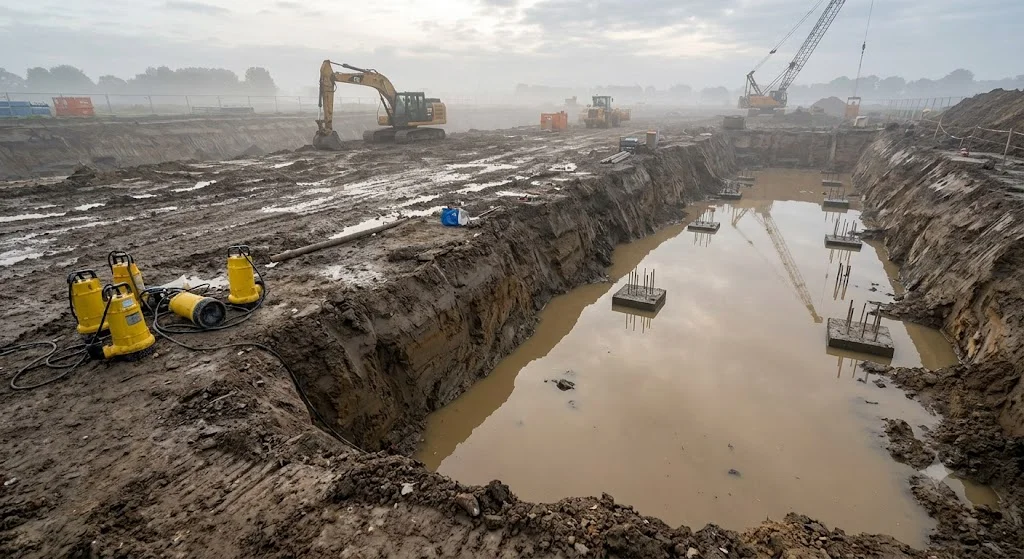
Learn when diesel dewatering pumps are used for construction, municipal and emergency drainage, and how to compare them with electric submersible dewatering pumps.
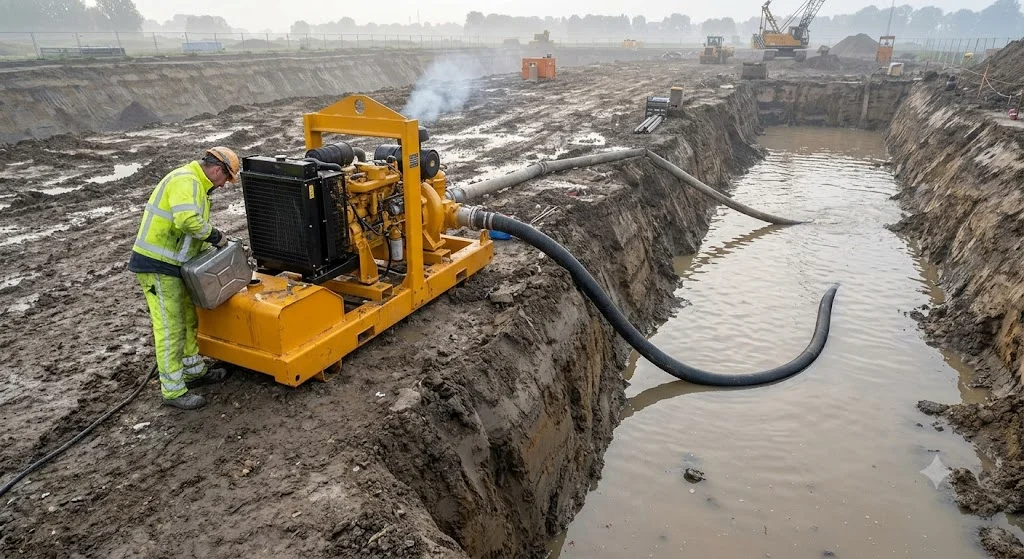
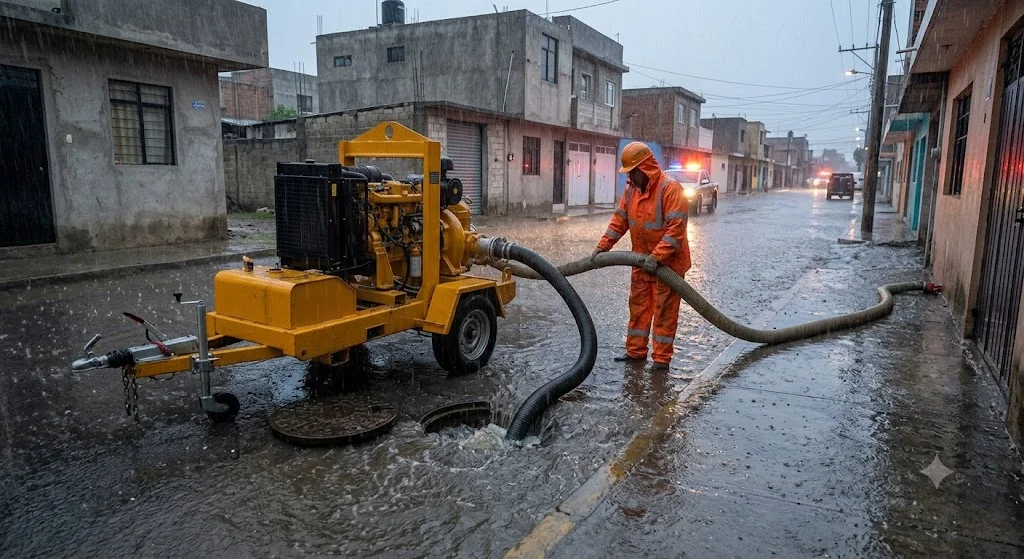
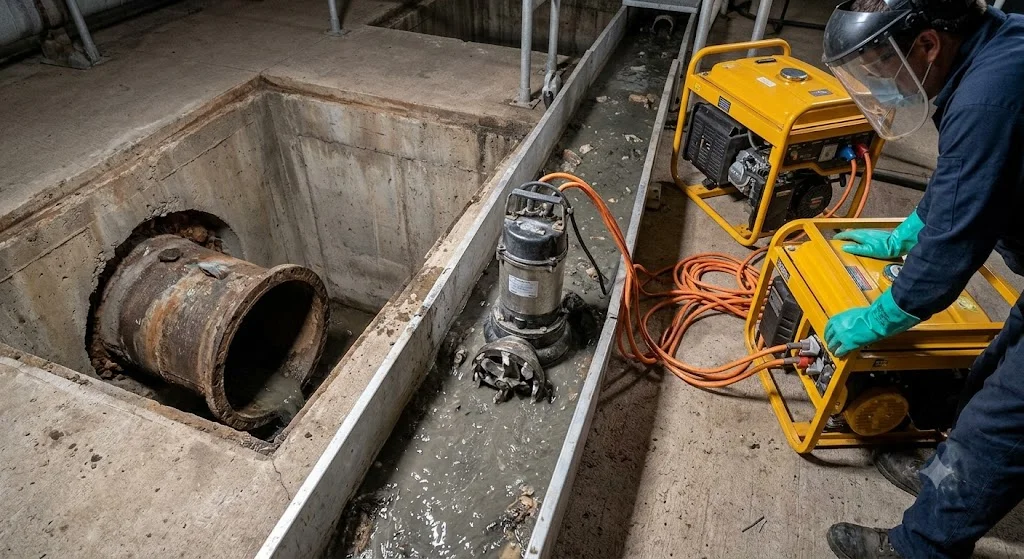
A diesel dewatering pump is used when water must be removed from a site and electric power is unavailable, unreliable or impractical. Common situations include remote construction sites, municipal flood response, emergency drainage, monsoon pumping, mining support, temporary bypass pumping and infrastructure work where fast deployment matters.
However, diesel is not automatically the best choice for every dewatering application. If reliable electric supply is available and the pump can be installed directly in the sump, an electric dewatering pump or submersible drainage pump may be simpler, quieter and easier to maintain. If the duty involves sewage or sludge rather than site water, compare submersible sewage sludge pumps instead.
The right choice depends on flow, head, site access, solids, power availability, runtime, fuel logistics, environmental limits and maintenance support.
Why diesel dewatering is considered
Dewatering projects often happen in difficult conditions. Construction excavations, stormwater drains, basements, trenches, roadworks, industrial yards and municipal low points may collect water faster than expected. During monsoon or emergency events, power supply can also be interrupted or unavailable exactly when pumping is needed most.
In these situations, diesel-powered pumping may be considered because it can operate independently of site electricity. A diesel pump can be useful when the project needs temporary water removal, mobile deployment or emergency pumping capacity.
But diesel power also adds practical requirements. The site must manage fuel, engine maintenance, noise, exhaust, operator access and safe placement. That is why buyers should compare diesel dewatering with electric submersible dewatering before finalizing.
Diesel dewatering pump vs electric submersible dewatering pump
The main difference is the power and installation approach.
A diesel dewatering pump is usually chosen where power independence and mobility matter. It may sit outside the water source and move water through suction/discharge piping, depending on configuration. It requires fuel, engine maintenance and safe operating space.
An electric submersible dewatering pump is installed directly in the pit, sump or flooded area. It is often simpler where reliable power is available and where the pump can operate submerged. It avoids suction-lift issues but needs electrical safety, cable management and suitable controls.
| Selection factor | Diesel dewatering pump may fit | Electric/submersible dewatering pump may fit | |---|---|---| | Power availability | Electric power unavailable or unreliable | Reliable electric supply available | | Deployment | Temporary, mobile, emergency response | Sump, pit or fixed/semi-fixed site duty | | Runtime | Long field operation with fuel access | Long operation with stable power and controls | | Maintenance | Engine service and fuel management required | Electrical/pump maintenance required | | Noise/exhaust | Must be managed on site | Usually quieter/no engine exhaust at pump location | | Site access | Needs safe surface placement | Needs pump access inside water source | | Best use | Remote construction, flood response, bypass pumping | Construction pits, drainage sumps, industrial dewatering |
Step 1: confirm power availability
Power availability is the first decision point. If the site has reliable electric power, an electric dewatering or drainage pump may be easier. If power is not available or the site is remote, diesel may become practical.
Check:
- Is grid power available at the pump location?
- Is generator power already planned?
- Is the supply stable during monsoon or emergency events?
- What voltage/phase is available?
- Can cables be safely routed to the sump?
- Is the site temporary or permanent?
If the only reason for diesel is “we are unsure about power,” the buyer should compare the cost and practicality of generator-backed electric pumping versus diesel pumping.
Step 2: calculate flow and total dynamic head
Diesel or electric, the pump must still match the duty point. Do not select only by engine size or motor HP. Define the flow and total dynamic head.
Document:
- Water volume to remove.
- Normal and peak inflow rate.
- Required emptying time.
- Vertical lift.
- Suction/discharge pipe length.
- Pipe diameter.
- Bends, valves and fittings.
- Discharge location and elevation.
- Whether multiple pumps will run together.
If the flow requirement is high or the discharge line is long, the pump must be selected from a performance curve. Undersized pumps can run continuously without controlling water level.
Step 3: review water condition and solids load
Dewatering water may contain sand, silt, grit, leaves, sludge-like deposits or construction debris. These conditions affect pump type, wear, strainer requirement and maintenance frequency.
Check:
- Is the water clean, dirty, sandy or silty?
- Is there abrasive grit?
- Are leaves, plastic or debris present?
- Is the water closer to wastewater/sewage than stormwater?
- Is a screen, strainer or settling arrangement needed?
- Will silt load increase during monsoon or excavation work?
For dirty water with manageable solids, compare Flow Chem’s submersible drainage pump and dewatering pump categories. For sewage or sludge, shift the selection to sewage/sludge pumping rather than dewatering.
Application 1: remote construction sites
Remote construction sites may not have stable power during early project phases. Excavation, trenching, foundation work and roadwork can still need water removal before electrical infrastructure is ready.
Diesel dewatering may be considered when:
- The site is temporary or remote.
- Power setup would delay work.
- The pump must move between locations.
- Rainwater or seepage must be removed quickly.
- Discharge distance and access change frequently.
If the site has stable power or generator support, electric submersible dewatering may still be a better fit. The decision should compare total operating cost, ease of deployment, maintenance and safety.
Application 2: municipal emergency drainage
Municipal teams may need emergency pumping during monsoon, flooding, drain overflow or low-lying area waterlogging. In these conditions, fast deployment and power independence can be important.
Diesel dewatering may be considered when:
- Flooded locations do not have safe electrical access.
- Pumping is temporary and urgent.
- Multiple locations need mobile pumping.
- Power failure is part of the emergency condition.
- Operators can safely manage fuel and engine runtime.
For routine municipal sumps with fixed installation, electric submersible drainage or sewage/sludge pumps may be more practical.
Application 3: industrial site drainage
Industrial sites may need emergency drainage for utility pits, rainwater collection areas, loading yards, process-area water or maintenance shutdowns. Diesel pumping may be considered when the pump is temporary or when electrical access is limited.
Before selecting diesel, confirm:
- Whether the liquid is clean water, dirty water, effluent, wastewater or chemical-containing discharge.
- Whether material compatibility is required.
- Whether the pumping area has ventilation restrictions.
- Whether noise and exhaust are allowed.
- Whether an electric option is safer or easier.
If the liquid is industrial effluent, compare effluent pumps and submersible waste water pumps before deciding.
Application 4: mining and quarry dewatering
Mining and quarry sites can involve remote locations, abrasive water, silt, variable elevations and continuous inflow. Diesel pumping may be considered where electric infrastructure is not available or where mobile dewatering is required.
However, mine water can be abrasive. Pump selection must consider materials, wear components, solids, duty cycle and service support. For mining applications, review Flow Chem’s mining pumps and dewatering pumps as part of the selection.
Application 5: temporary bypass pumping
Temporary bypass pumping is used when water needs to be diverted during maintenance, civil work or infrastructure repair. Diesel may be considered where the bypass is temporary and high mobility is needed.
Selection should include:
- Flow rate and peak inflow.
- Runtime and fuel plan.
- Discharge route.
- Backup pumping requirement.
- Noise restrictions.
- Safety and access.
If the bypass involves sewage or sludge, do not treat it as normal dewatering. Review sewage/sludge or cutter-pump suitability instead.
When diesel dewatering may not be the best choice
Diesel dewatering may not be ideal when:
- Reliable electric power is available.
- The pump can sit directly inside the sump.
- Noise or exhaust restrictions are strict.
- Fuel storage is difficult.
- The site lacks trained operators.
- Continuous unattended operation is required without fuel monitoring.
- The liquid is sewage, sludge or chemically aggressive wastewater requiring a different pump type.
In these cases, an electric submersible dewatering, drainage, effluent or sewage pump may be the safer fit.
Buyer checklist before requesting a quote
Before requesting diesel or dewatering pump guidance from Flow Chem, prepare:
- Application: construction, municipal, industrial, mining or emergency drainage.
- Liquid type: clean water, dirty water, silt water, effluent, wastewater, sewage or sludge.
- Required flow rate.
- Total dynamic head.
- Suction/discharge pipe length and diameter.
- Site access and pump placement.
- Power availability and reliability.
- Runtime per day.
- Fuel access if diesel is being considered.
- Noise/exhaust restrictions.
- Solids, silt or debris details.
- Standby pump requirement.
- Whether the requirement is temporary or permanent.
This information allows Flow Chem to confirm whether a dewatering/drainage pump is suitable and whether diesel-powered pumping should be considered or avoided.
Common selection mistakes
Mistake 1: selecting diesel only because it sounds heavy-duty
Diesel power does not automatically make the pump hydraulically correct. Flow, head, solids and duty cycle still decide performance.
Mistake 2: ignoring electric submersible options
Where reliable power exists, electric submersible pumps can be simpler and practical. Compare both before deciding.
Mistake 3: treating sewage as dewatering water
Sewage and sludge require different pump evaluation. Use sewage sludge or cutter pump selection for those duties.
Mistake 4: underestimating fuel and maintenance needs
Diesel pumps need fuel planning, engine service, operator checks and safe placement. These costs should be included.
Mistake 5: skipping standby planning
Emergency drainage and municipal duties often need backup capacity. A single pump may not be enough when flooding risk is high.
Recommended Flow Chem selection path
Use this practical path:
1. If the duty is normal construction or industrial water removal with electric power available, start with dewatering pumps. 2. If the duty is drainage water with manageable solids, compare submersible drainage pumps. 3. If power is unavailable or the application is emergency/mobile, consider whether diesel-powered pumping is required, subject to product-fit confirmation. 4. If the liquid is sewage or sludge, route to submersible sewage sludge pumps. 5. If fibrous clogging is present, compare submersible cutter pumps. 6. If the duty is mining or quarry water, review mining pumps and dewatering requirements together.
Conclusion
A diesel dewatering pump can be useful for remote construction sites, municipal emergency drainage, mining support, temporary bypass pumping and monsoon water removal where electric power is unavailable or unreliable. But diesel is not automatically the best answer. The pump must still match flow, total head, solids, runtime, access and maintenance conditions.
For most buyers, the best starting point is a structured comparison: confirm power availability, calculate flow/head, check water condition, assess duty cycle and compare diesel with electric submersible dewatering options. If diesel product fit is not confirmed, this article should remain a comparison guide and pass enquiries to Flow Chem’s dewatering selection team.
For guidance, contact Flow Chem through the enquiry page and share your site details, power availability, required flow/head, discharge distance and water condition.
Frequently asked questions
What is a diesel dewatering pump used for?
A diesel dewatering pump is used for water removal where electric power is unavailable, unreliable or impractical. Common uses include remote construction, flood response, municipal emergency drainage, mining support and temporary bypass pumping.
Is diesel better than an electric dewatering pump?
Not always. Diesel may be better for remote or emergency mobile pumping without power. Electric submersible dewatering pumps may be simpler where reliable power is available and the pump can operate inside the sump.
Can diesel dewatering pumps handle sewage?
Do not assume that they can. Sewage and sludge require specific sewage/sludge or cutter-pump evaluation. A normal dewatering pump should not be used for sewage unless the pump is designed for that duty.
What details are needed to select a diesel dewatering pump?
You need required flow, total dynamic head, suction/discharge layout, water condition, solids load, runtime, fuel access, site access, noise/exhaust restrictions and standby requirement.
When should I choose a submersible dewatering pump instead?
Choose or compare a submersible dewatering pump when reliable electric power is available, the pump can be installed in the sump or pit, and the duty is water removal rather than diesel-required emergency pumping.
Does Flow Chem sell diesel dewatering pumps?
This must be confirmed before publishing any product claim. Until confirmed, this article should be framed as a buyer education and comparison guide that supports Flow Chem’s dewatering pump selection process.
Need help selecting the right pump?
Share your flow, head, liquid type, solids, site layout and duty cycle with Flow Chem Pumps. Our team can help you shortlist the right pump.