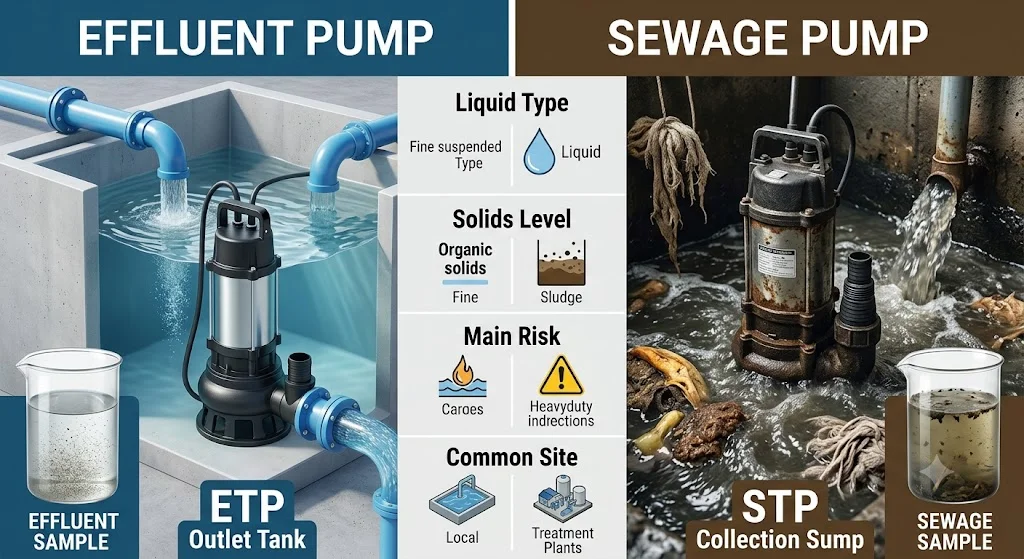
Compare effluent pumps and sewage pumps for STP, ETP, industrial wastewater and commercial drainage duties. Learn which pump to choose by liquid type, solids, head and duty.
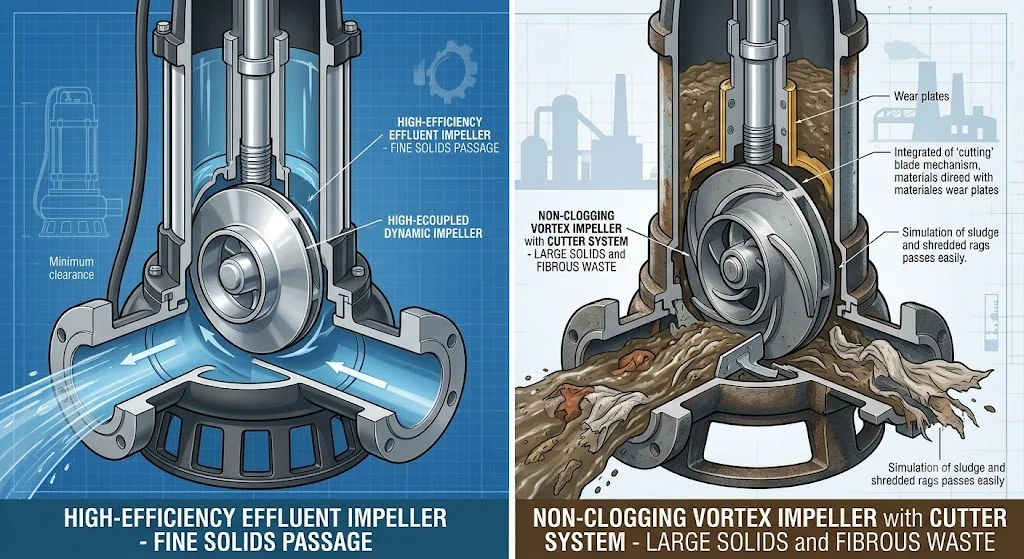
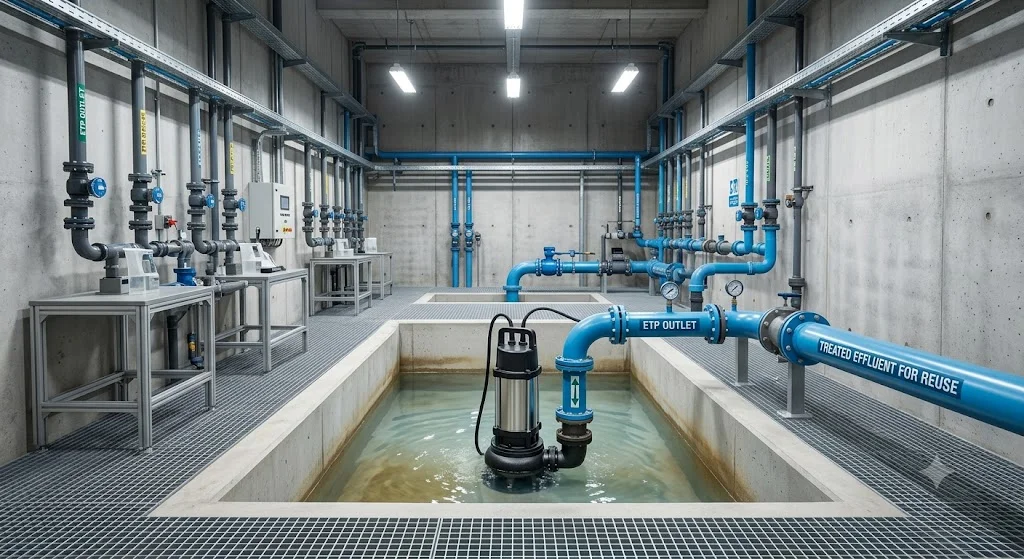
Choose an effluent pump when the liquid is treated, semi-treated or relatively lighter wastewater with limited solids. Effluent pumps are commonly considered for ETP outlets, treated wastewater transfer, process-water discharge, drainage of clearer industrial wastewater and applications where the liquid is not raw sewage or thick sludge.
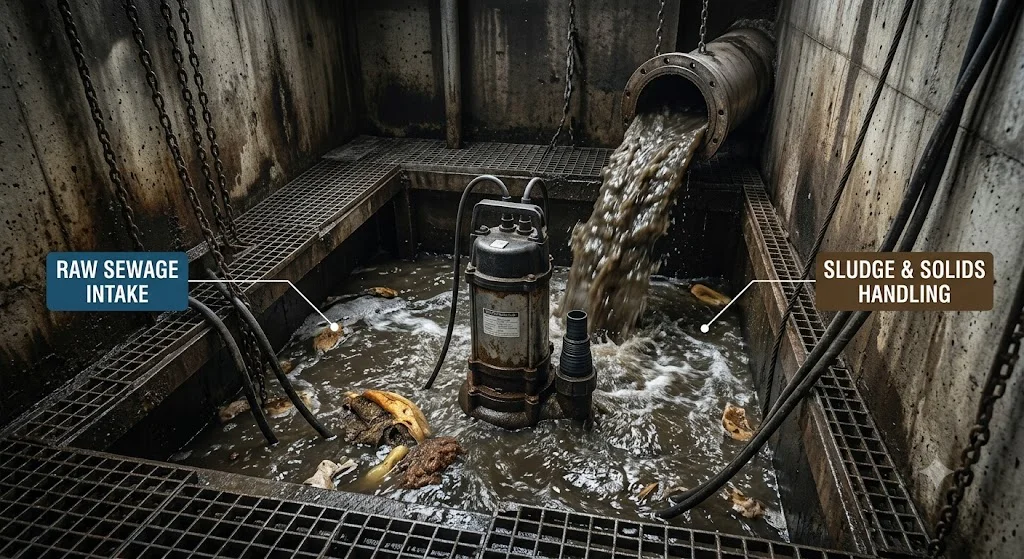
Choose a submersible sewage sludge pump when the application involves sewage water, suspended solids, organic matter, sludge, STP duties or municipal/commercial wastewater where solids handling is more important. If the wastewater contains fibrous material such as rags, wipes, cloth or stringy waste, compare the duty with a submersible cutter pump instead of assuming a normal sewage pump is enough.
The right selection depends on the liquid and solids profile. Do not select from the word “wastewater” alone. In industrial sites, wastewater may mean treated effluent, oily water, process discharge, sewage, sludge or mixed solids-laden liquid. Each route needs a different pump selection logic.
Why this comparison matters for industrial buyers
Effluent pumps and sewage pumps are often grouped together because both may be used in wastewater systems. But they are not interchangeable for every duty. A pump that works well for treated effluent can fail quickly if it is installed in raw sewage or sludge. A sewage pump may be unnecessary or inefficient if the duty is only light effluent transfer.
Wrong selection can create:
- Frequent clogging.
- Low discharge or poor flow.
- Motor overload.
- Higher maintenance cost.
- Early wear.
- Sump overflow risk.
- Process downtime.
- Incorrect procurement specifications.
For Flow Chem, this comparison article has an important SEO purpose. It should help buyers understand the difference while routing commercial intent to the correct money pages:
- Effluent pumps for effluent-transfer and lighter wastewater duties.
- Submersible sewage sludge pump for sewage, sewage water, submersible sewage pump, sludge and solids-laden wastewater duties.
- Submersible waste water pump for broader industrial wastewater applications.
What is an effluent pump?
An effluent pump is used to move treated, semi-treated or lighter wastewater from one point to another. In industrial and commercial settings, effluent may come from ETP processes, treated water tanks, process outlets, drainage pits or wastewater systems where the liquid does not contain heavy sewage solids.
Typical effluent pump applications include:
- ETP treated or semi-treated water transfer.
- Industrial process water discharge where solids are limited.
- Commercial wastewater drainage where the liquid is not raw sewage.
- Transfer from collection tanks to treatment or discharge points.
- Applications where suspended solids are lower and pump clogging risk is manageable.
An effluent pump should still be selected carefully. Effluent can contain chemicals, fine suspended solids, temperature variation or corrosive components depending on the process. The buyer should confirm material compatibility and duty conditions before final selection.
What is a sewage pump?
A sewage pump is used to move sewage water or wastewater containing solids. In STP, municipal, commercial and industrial applications, sewage pumps are selected when the liquid may contain organic matter, suspended solids, sludge, wastewater residue or solids that require proper passage through the pump.
Typical sewage pump applications include:
- STP collection and transfer sumps.
- Municipal sewage pumping stations.
- Commercial building sewage transfer.
- Industrial wastewater pits with sewage-like solids.
- Sludge or sewage transfer duties where the pump is matched to solids handling.
- Wastewater applications where a normal drainage or effluent pump may clog.
For these applications, Flow Chem’s submersible sewage sludge pump page should remain the main commercial destination. If the site has repeated ragging from fibrous material, the buyer should also review the submersible cutter pump page.
Main difference between effluent pumps and sewage pumps
The main difference is the type of liquid and solids each pump is expected to handle.
| Selection factor | Effluent pump | Sewage pump / sewage sludge pump | |---|---|---| | Liquid type | Treated, semi-treated or lighter wastewater | Raw sewage, sewage water, wastewater with solids or sludge | | Solids level | Limited or manageable suspended solids | Higher solids, organic matter, sludge or sewage residue | | Main risk | Material compatibility, flow/head mismatch, fine solids | Clogging, solids passage, ragging, sludge load, motor overload | | Common site | ETP outlet, process effluent, treated water transfer | STP, municipal sewage, commercial sewage, wastewater sumps | | Related Flow Chem page | `/effluent-pumps/` | `/submersible-sewage-sludge-pump/` | | Alternative route | `/submersible-waste-water-pump/` for broader wastewater | `/submersible-cutter-pump/` if fibrous solids cause clogging |
In simple terms: effluent pumps are for lighter treated or semi-treated wastewater. Sewage pumps are for sewage and solids-laden wastewater. If the site cannot clearly define the liquid, it should not finalize pump selection yet.
Step 1: identify the liquid source
Start by documenting where the liquid comes from. This is the fastest way to avoid wrong selection.
Ask:
- Is the liquid from an STP, ETP, process pit, drainage sump or sewage line?
- Is it treated, semi-treated or raw wastewater?
- Does it contain suspended solids, sludge, grit, oil, chemicals or fibrous waste?
- Is the liquid mostly water, or does it behave like sludge?
- Does the site already experience clogging or overload?
If the source is ETP treated or semi-treated water with limited solids, an effluent-pump route may be appropriate. If the source is STP sewage or municipal wastewater, a sewage-pump route is more likely.
Step 2: check solids type and concentration
Solids define pump risk. The same flow and head can require a different pump if the solids change.
For effluent applications, check:
- Fine suspended solids.
- Process residue.
- Chemical content.
- Temperature.
- Corrosion risk.
- Whether solids settle in the tank.
For sewage applications, check:
- Organic solids.
- Sludge.
- Grit.
- Rags or fibrous material.
- Wipes, cloth or plastic.
- Solids size and concentration.
If fibrous material is present, a standard sewage pump may not solve the problem. Review cutter pump suitability. If thick sludge is present, confirm sewage sludge pump suitability rather than using a light effluent pump.
Step 3: calculate flow and total dynamic head
After liquid type and solids profile are clear, calculate the hydraulic duty.
Document:
- Required flow rate.
- Static lift.
- Horizontal pipe length.
- Pipe diameter.
- Number of bends and valves.
- Discharge point condition.
- Operating hours per day.
- Whether the site requires duty/standby pumps.
Effluent pumps and sewage pumps both need correct flow and head selection. A sewage pump with strong solids handling can still underperform if it is not matched to the required head. An effluent pump can still overload if the discharge line or process condition is not considered.
Step 4: review pump construction and material compatibility
Industrial wastewater varies more than municipal sewage. Effluent from one plant may be relatively clear, while another plant’s effluent may contain chemicals, fine solids, oil, temperature load or corrosive elements.
Review:
- Pump body material.
- Impeller suitability.
- Seal requirement.
- Chemical compatibility.
- Temperature range.
- Abrasion risk.
- Maintenance access.
Avoid universal claims such as “one pump is suitable for all industrial wastewater.” Selection must be matched to the specific liquid.
Step 5: decide whether the site needs wastewater, sewage, sludge or cutter route
Many buyers start with the broad phrase “wastewater pump.” The correct product route should be narrowed after inspection.
Use this decision logic:
1. If the liquid is treated or semi-treated and solids are limited, shortlist an effluent pump. 2. If the liquid is sewage water with normal sewage solids, shortlist a sewage pump or sewage sludge pump. 3. If the liquid is thick sludge or settled solids, review sewage sludge pump suitability carefully. 4. If the liquid contains rags, wipes, cloth, plastics or stringy solids, compare with a cutter pump. 5. If the duty is mainly rainwater, seepage water or construction water, use a dewatering or drainage pump route.
For water-removal duties that are not sewage, review Flow Chem’s dewatering pumps or submersible drainage pump. For treated wastewater and effluent, use effluent pumps or submersible waste water pumps.
Application examples
ETP treated effluent transfer
An ETP outlet may need to transfer treated or semi-treated water from one tank to another or to a discharge point. If solids are low and chemical compatibility is confirmed, an effluent pump may be the correct route.
The buyer should still check head, flow, material, operating hours and any process-specific liquid properties.
STP sewage transfer
An STP sewage transfer sump usually contains sewage water and solids. In this case, a sewage pump or sewage sludge pump is more appropriate than a light effluent pump. If ragging is a known issue, compare with cutter-pump selection.
Industrial wastewater pit
Industrial wastewater pits need careful review. A pit may contain treated effluent, process residue, sludge, oil, chemical wastewater or mixed solids. The pump should not be selected until the liquid is identified.
A submersible waste water pump may be relevant for broader wastewater handling, but sewage/sludge/cutter/effluent routes should be compared based on the actual site duty.
Commercial building wastewater
Commercial buildings may have different sumps for sewage and non-sewage water. A sewage sump needs sewage-pump selection. A drainage or treated-water sump may use a different route. Combining these duties without checking liquid type can create failures.
Replacement after repeated clogging
If the existing pump clogs frequently, do not replace it with the same type immediately. Inspect the blockage material. If it is fibrous, review cutter pump suitability. If it is sludge-heavy, review sewage sludge pump selection. If it is mainly fine solids in treated effluent, check effluent pump construction and upstream process conditions.
Buyer checklist before selecting the pump
Before requesting a quote, collect:
1. Source of liquid: ETP, STP, process pit, drainage sump or sewage line. 2. Liquid stage: raw, treated, semi-treated or mixed. 3. Solids type: fine, suspended, sludge, fibrous, gritty or abrasive. 4. Solids concentration and approximate size. 5. Required flow rate. 6. Total dynamic head. 7. Pipe length and diameter. 8. Number of bends, valves and restrictions. 9. Operating hours per day. 10. Installation type: fixed, portable, guide-rail or sump mounted. 11. Available power supply and phase. 12. Material compatibility concerns. 13. Clogging, overload or failure history. 14. Maintenance access and downtime tolerance.
This checklist helps Flow Chem recommend the correct route instead of forcing every wastewater duty into one pump category.
Common mistakes in effluent and sewage pump selection
Mistake 1: treating all wastewater as the same
Wastewater can mean effluent, sewage, sludge, drainage water or process water. These are not the same duty. The pump route must match the liquid.
Mistake 2: using an effluent pump for sewage solids
A light effluent pump may not be suitable for sewage, sludge or solids-heavy wastewater. If solids are present, use sewage or sludge pump selection logic.
Mistake 3: using a sewage pump for treated effluent without checking material compatibility
A sewage pump may handle solids, but industrial effluent can include chemical or temperature conditions that need material review.
Mistake 4: ignoring fibrous clogging
If rags, wipes, cloth or plastics are causing repeated blockage, compare with a cutter pump instead of only increasing HP.
Mistake 5: publishing unsupported capacity or price claims
Avoid generic price, model, capacity, material or stock claims unless Flow Chem confirms them. This article should educate buyers and route them to a technical inquiry.
How this article should support Flow Chem rankings
This P2 article should strengthen the wastewater, effluent and sewage topical cluster while passing authority to money pages.
Recommended internal linking actions after publishing:
- Link to `/effluent-pumps/` with anchors such as “effluent pumps”, “effluent pump for ETP” and “industrial effluent pump”.
- Link to `/submersible-sewage-sludge-pump/` with anchors such as “sewage pump”, “submersible sewage pump” and “sewage sludge pump”.
- Link to `/submersible-waste-water-pump/` with anchors such as “submersible waste water pump” and “industrial wastewater pump”.
- Link to `/submersible-cutter-pump/` only where fibrous solids/ragging are discussed.
- Link to `/dewatering-pumps/` and `/submersible-drainage-pump/` to clarify non-sewage water-removal duties.
- Add reciprocal links from `/effluent-pumps/`, `/submersible-sewage-sludge-pump/` and `/submersible-waste-water-pump/` if page-edit capacity allows.
- Use root-level slug only: `/effluent-pumps-vs-sewage-pumps-industrial-buyer-comparison`.
This article should not dilute the main `sewage pump` target. The primary sewage ranking page remains `/submersible-sewage-sludge-pump/`. The article’s role is to clarify buyer intent and strengthen internal relevance.
Frequently asked questions
What is the difference between an effluent pump and a sewage pump?
An effluent pump is used for treated, semi-treated or lighter wastewater with limited solids. A sewage pump is used for sewage water, STP duties and wastewater containing solids, sludge or organic matter. The correct choice depends on liquid type, solids and duty point.
Can an effluent pump be used for sewage?
An effluent pump should not be used for sewage unless the solids and liquid conditions are suitable. Raw sewage, sludge or solids-heavy wastewater usually requires a sewage pump, sewage sludge pump or cutter pump depending on the solids profile.
Which pump is better for ETP treated water?
For ETP treated or semi-treated water with limited solids, an effluent pump or suitable wastewater pump may be appropriate. The final selection should check flow, head, material compatibility, temperature and chemical conditions.
Which pump is better for STP sewage transfer?
For STP sewage transfer, a sewage pump or sewage sludge pump is usually more suitable because the liquid may contain solids, organic matter or sludge. If fibrous material causes clogging, a cutter pump should also be reviewed.
How do I choose between effluent, sewage, sludge and cutter pumps?
Start with the liquid source and solids profile. Use an effluent pump for lighter treated wastewater, a sewage pump for sewage water, a sludge pump for thicker solids-laden liquid and a cutter pump where fibrous solids cause repeated clogging.
Need help selecting the right pump?
Share your flow, head, liquid type, solids, site layout and duty cycle with Flow Chem Pumps. Our team can help you shortlist the right pump.